Pollarding trees in Six Mile, SC is a controlled pruning method that keeps fast-growing species sized right for years without the storm damage risk of an untrained hack job. It works by training a tree to regrow from the same cut points every season, producing a denser, more predictable canopy instead of one that sprawls into a roofline or power line. Done wrong, it causes the exact same problems as topping, so knowing the difference before anyone picks up a saw matters as much as the cut itself.
This guide covers what pollarding actually is, how it's different from topping, which trees around Oconee County respond well to it, and a local pruning rule most generic guides never mention.
What Is Pollarding?
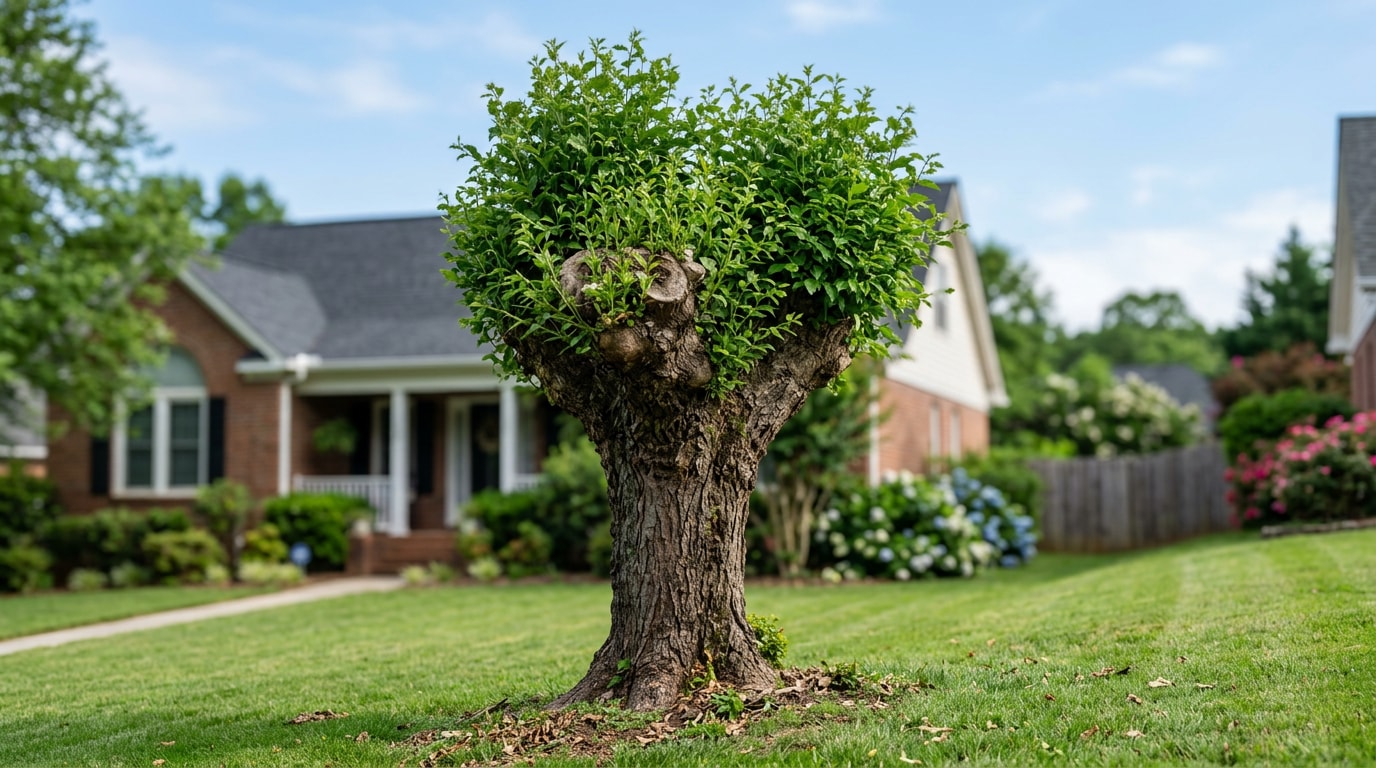
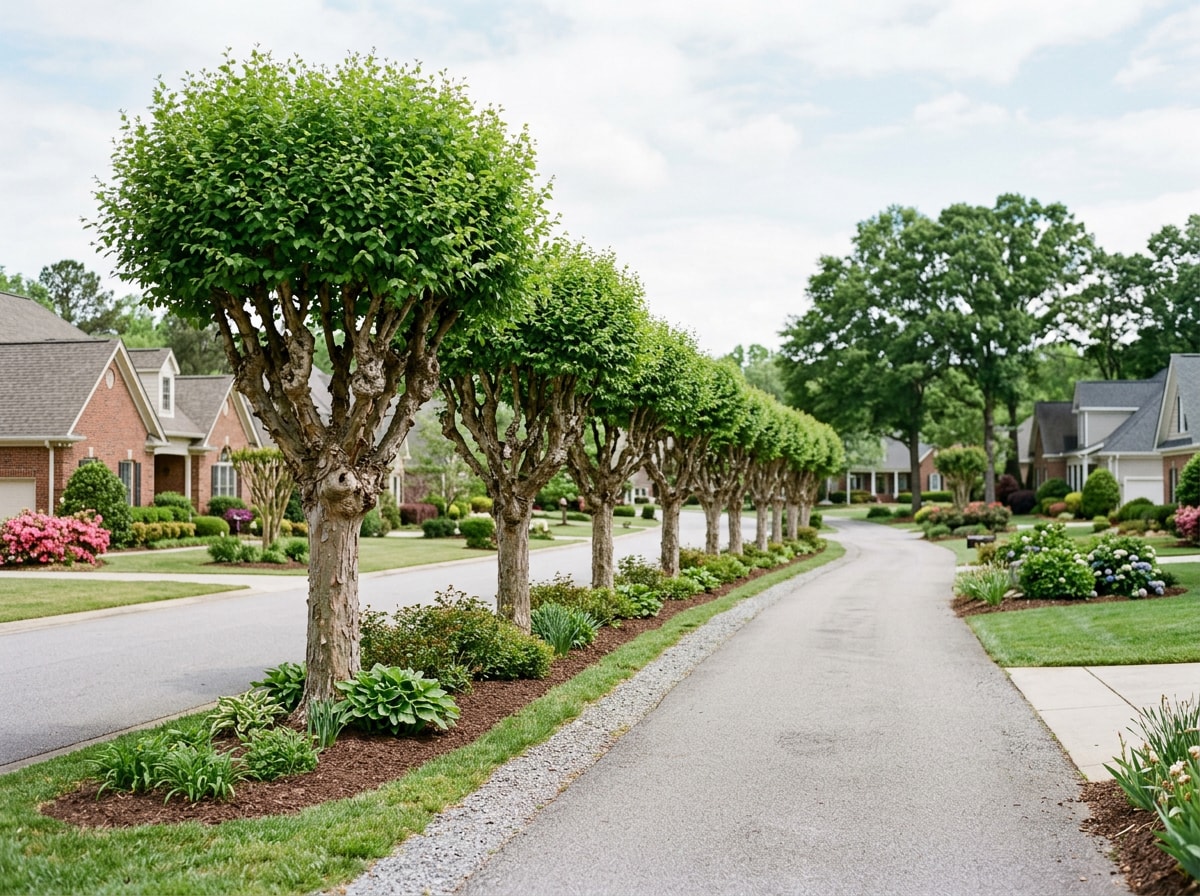
Pollarding is a tree pruning technique where branches are cut back to a fixed point on the trunk, called a pollard head, to control size and trigger dense new growth each season. Pollarding is a tree pruning method in which the upper branches of a tree are cut back to the same points on a regular schedule, creating a framework of knobby growth points from which new shoots emerge. Unlike routine trimming, the same cut points get reused year after year.
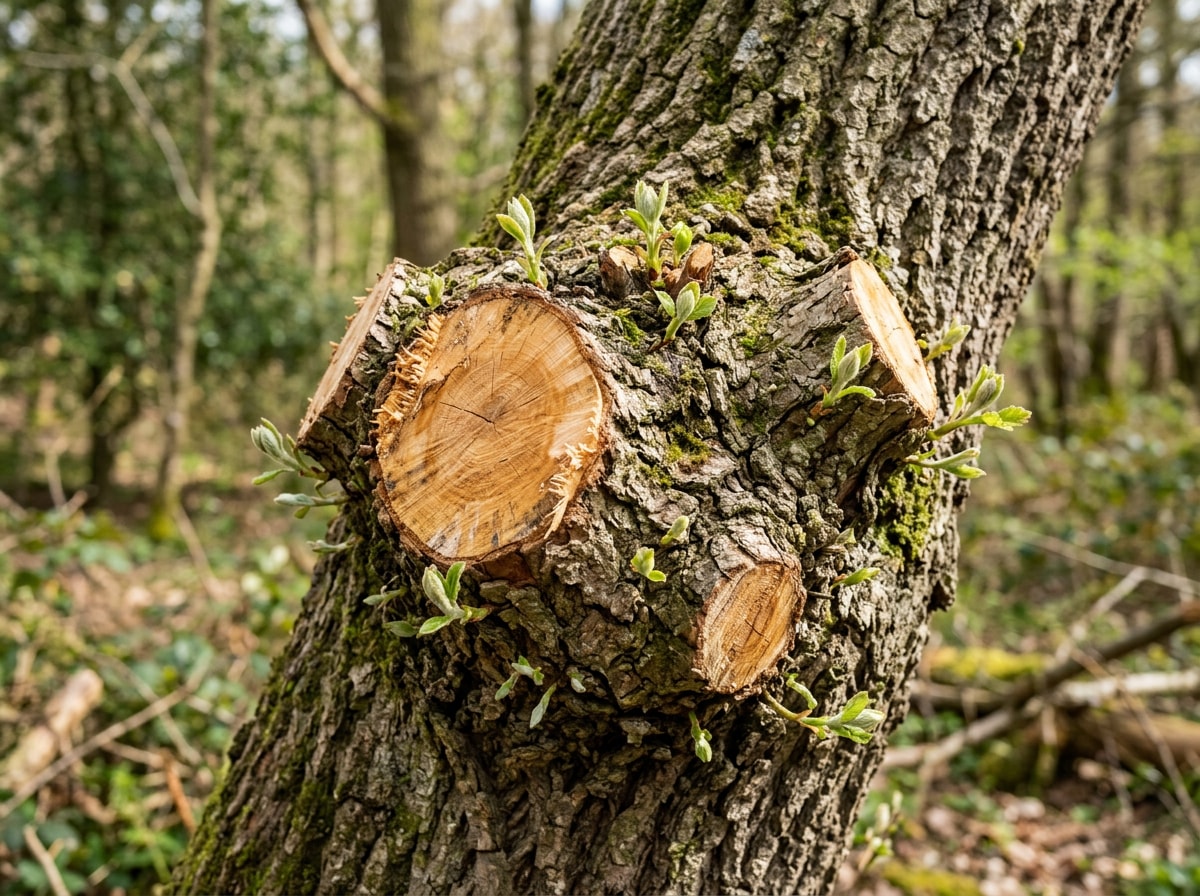
That raised "head" or knuckle forms after the first hard cut and becomes the permanent growth point for future pruning cycles. New shoots emerge from it each spring, giving the tree a fuller, more compact canopy than it would develop on its own.
This isn't a new idea. The practice has been used for centuries and is especially common in landscapes where trees must be kept at a controlled height or width. In Upstate SC, the same logic applies to properties with tight lot lines, overhead utility wires, or homeowners who want a tree's size held steady rather than left to spread unchecked.
Pollarding vs. Topping: Why the Difference Matters in Six Mile, SC
Pollarding and topping both remove large sections of canopy, but the similarities stop there.
- Pollarding is planned, started on a young tree, and repeated at the same cut points for the tree's life.
- Topping is indiscriminate cutting, usually forced on a mature tree that was never trained for it.
Pollarding is not the same as topping, which is generally considered harmful because it removes branches without a long-term management plan. Topping shocks a tree's system. It removes so much leaf surface at once that the tree responds with weak, poorly attached regrowth, and the exposed cuts invite decay.
Here's something most pollarding guides skip entirely: South Carolina already has a legal answer on this for state rights-of-way. Topping, hatracking, pollarding or dehorning of trees is prohibited under SCDOT's vegetation management rules for roadside trees. That rule exists specifically because unplanned heading cuts on mature roadside trees create the same decay and failure risks arborists warn about everywhere else. It's a useful reminder that even a "correct" technique like pollarding is only appropriate on the right tree, in the right spot, started at the right age.
Benefits of Pollarding for Upstate SC Properties
Done correctly, pollarding offers real, practical advantages:
- Predictable size control — canopy growth stays within a fixed footprint instead of spreading unchecked.
- Denser regrowth once the pollard head is established.
- Extended usable lifespan for a tree growing in a tight space.
When performed correctly, including follow-up pruning, pollarding allows for healthy regeneration of new wood while extending the productive life of the tree.
- Lower storm risk — a smaller, more controlled canopy catches less wind resistance than an overgrown crown, which matters during Upstate thunderstorms.
- More sunlight to the ground below a heavy canopy, useful for lawns or garden beds.
Common signs a tree is a candidate: branches crowding a roofline, growth pressing into power lines, or a canopy that's become top-heavy and unbalanced. If you're seeing any of these, it's worth talking through options with a tree trimming service.
Trees Suitable for Pollarding Around Six Mile, SC
Not every species tolerates pollarding well, and picking the wrong one is a fast way to stress or disfigure a tree. Good candidates are fast-growing, deciduous trees that respond to hard pruning with vigorous new shoots.
| Species | Pollarding Fit | Notes |
|---|---|---|
| Willow | Classic candidate | Fast regrowth, but weak wood if pruning lapses |
| Lime/Linden | Classic candidate | Common in European urban pollarding |
| London Plane | Good candidate | Tolerates hard annual cuts well |
| Poplar | Good candidate | Fast growth needs frequent re-cutting |
| River Birch | Realistic Upstate pick | Naturalized locally, responds well to size control |
| Sweetgum | Realistic Upstate pick | Fast grower, good knuckle formation |
| Red/Silver Maple | Use with caution | Can work but brittle wood needs monitoring |
| Oak | Caution | Slow recovery; start young only |
| Crape Myrtle | Avoid heavy pollarding | Over-cutting here is the "crape murder" problem — see our crepe myrtle trimming guide for the right technique |
| Conifers (pine, fir) | Avoid | Most conifers do not recover from hard pruning |
A regional extension office or local tree crew can confirm which species make sense for a specific lot and soil type before any cuts are made.
Evergreen Options for Year-Round Structure
Evergreens are pollarded far less often than deciduous trees, but a few species — holly, yew, and bay laurel — can tolerate it when managed carefully. This appeals to homeowners who want year-round screening instead of a bare canopy in winter.
Evergreen pollarding is less forgiving than deciduous pollarding. Mistakes recover more slowly, so it's worth approaching with extra caution or professional guidance.
How to Pollard a Tree: Step-by-Step
- Choose a pollard height while the tree is still young.
- Make the first set of heavy cuts at that point to establish the head.
- Let new shoots grow through the following season.
- Re-cut the resulting shoots at the same spot in future seasons, just above the previous knuckle.
- Repeat on a cycle matched to the species' growth rate.
Starting early is what allows the tree to form a healthy, stable pollard head rather than reacting poorly to shock cuts later in life. Each cut should be clean, without tearing bark or leaving ragged wounds — sloppy cut placement is what turns pollarding into something closer to topping.
Best Time to Pollard in Six Mile's Climate
Late winter to early spring, while the tree is still dormant, is generally the best window. Cutting before new growth starts reduces sap loss and lowers disease risk, which matters in Six Mile's humid Upstate climate where wet spring weather can follow close behind a dormant pruning window.
Tools and Equipment Needed
Basic pollarding calls for:
- A sharp pruning saw
- Loppers and hand pruners
- A pole pruner for higher branches
- Clean tools, sanitized between cuts and between trees, to avoid spreading disease
Large or mature trees often need rigging equipment and aerial access that go beyond typical homeowner tools. At that point, contacting a tree service covering Six Mile, SC is safer than attempting it solo.
Maintaining a Pollarded Tree Over Time
Pollarding isn't a one-time job. Most species need re-pollarding on a cycle of roughly one to five years, depending on growth rate and the look you're maintaining.
Skipping that maintenance cycle lets regrowth become heavy and weakly attached to the pollard head, raising the risk of limb failure during storms. If a pollarded tree on your property hasn't been cut back in a while and a storm has already loosened limbs, storm cleanup service should come before the next re-pollarding cycle, not after.
When to Call a Professional
In our fieldwork around Six Mile and the rest of Oconee County, the calls we get most often aren't about starting a new pollard — they're about fixing one that was never trained correctly, or a tree that was topped years ago by an unlicensed crew and is now dropping weak limbs. Pruning large trees safely requires more than a saw and a ladder. Pruning or removing trees, especially large trees, can be dangerous work. Tree work should only be done by those trained and equipped to work safely in trees.
If you're weighing whether a tree on your Six Mile, SC or Oconee County, SC property is a good pollarding candidate, or whether it's past the point where tree removal is the safer call, get a free estimate before you make the first cut.
FAQ
Is Pollarding Bad for Trees?
Pollarding is not inherently bad for trees. It only causes harm when it's performed on an unsuitable species, started too late on a mature tree, or done with poor cutting technique.
Can Pollarding Kill a Tree?
Incorrect pollarding can stress or kill a tree, particularly if it's the wrong species, started on a tree that's already mature, or cut poorly. Correctly timed, correctly placed pollarding on a suitable species does not kill the tree.
Can You Start Pollarding a Mature Tree?
Generally, no. Large branches on a mature tree leave wounds that can't heal properly, which invites decay and disease. Pollarding works best when it starts on a young tree.
How Often Should a Tree Be Pollarded?
Most pollarded trees need re-cutting every one to five years, depending on the species and how tightly you want the canopy controlled. Faster-growing species typically need more frequent attention.
Do Trees Grow Back After Pollarding?
Yes. New shoots emerge from the pollard head the following growing season, and the bare look right after cutting is only temporary.
Is Pollarding Allowed Along SC Roads and Rights-of-Way?
No, not on state-maintained rights-of-way. SCDOT's vegetation management rules specifically prohibit topping, hatracking, pollarding, or dehorning of roadside trees, so this technique is meant for private property, not trees along state roads.
If you're still deciding whether pollarding, trimming, or removal is the right call for a tree on your property, visit Argus Forestry or browse our guide on transplanting pine trees in Six Mile, SC for related timing advice, then contact us for a free estimate.