Crepe myrtle trimming in Pendleton, SC only works if you hit the right week in late winter and make the right cut the first time. Miss the timing or hack the wrong branch and you're stuck with bare stubs, weak regrowth, or a tree that skips its summer bloom entirely. This guide covers exactly when to cut, how to avoid the "crepe murder" look, and when it's smarter to call in a crew.
When to Trim Crepe Myrtles in Pendleton, SC
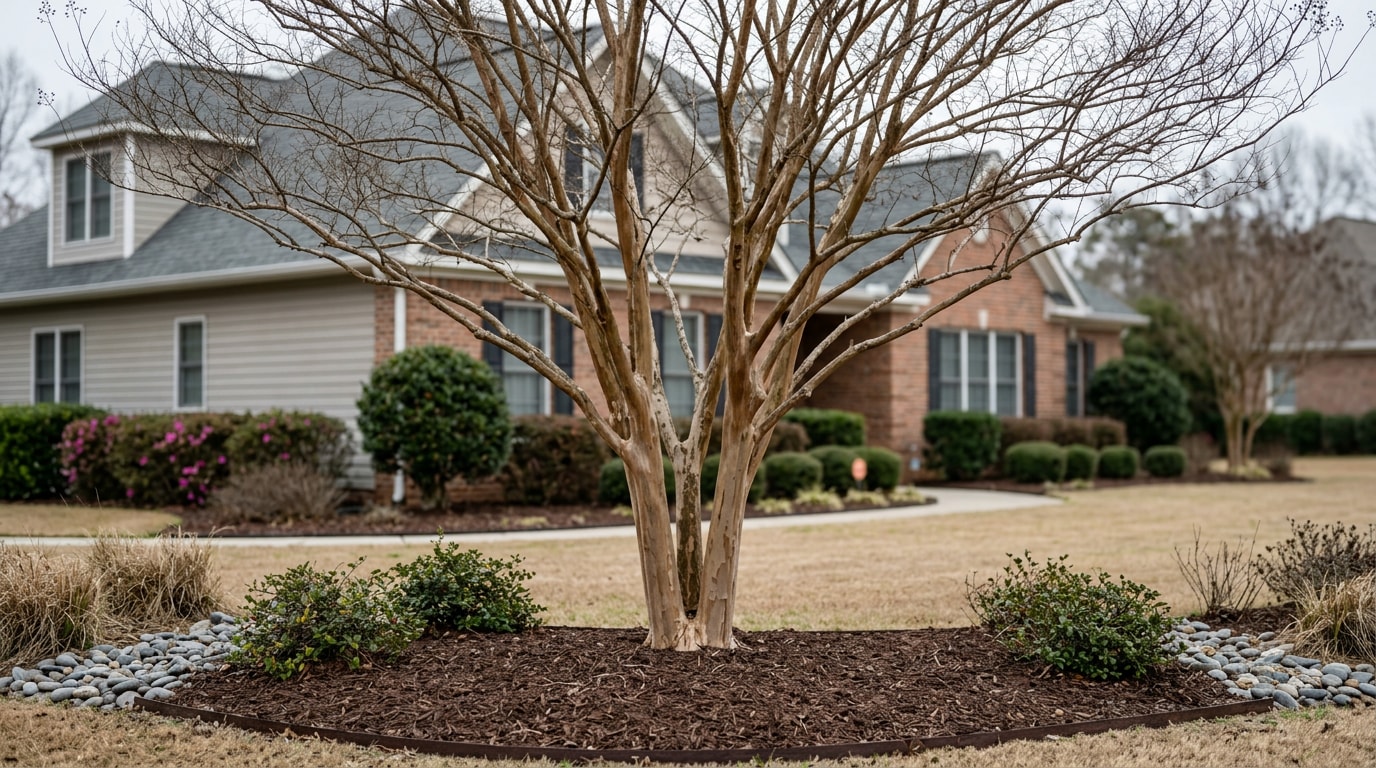
Crape myrtles form their flower buds on new wood each spring, so they can be pruned any time in winter dormancy without hurting that season's blooms. In the Upstate, that generally means mid-February through early March, once the coldest nights have passed but before buds swell.
Pendleton sits in Anderson County, close enough to Clemson that frost timing tracks closely with the guidance Clemson Cooperative Extension publishes for the region. On crews working yards across Pendleton{{SITE_URL}}/areas/pendleton-sc and neighboring Clemson, SC, we've found that cutting even two or three weeks early, during a warm January stretch, is a common mistake. It pushes tender growth that a late-season frost can damage.
If you'd rather not track frost dates yourself, a local tree trimming crew can time the cut for your specific property.
Natural Style vs. Formal Style Pruning
Most crepe myrtle pruning falls into one of two approaches. Both aim to improve structure, but they get there differently.
- Natural style: Remove inward-growing, damaged, and crossing branches to open the canopy. The tree keeps its own silhouette, and most homeowners who want a low-maintenance look prefer this.
- Formal style: Cut back to a consistent branch framework every year. It produces a more manicured shape but requires annual upkeep to maintain.
Neither approach calls for topping. According to Clemson's Home & Garden Information Center, developing a tree form means selecting three to five of the strongest trunks at ground level and removing the rest, not flattening the top of the canopy every winter.
How We Approach a Crepe Myrtle Trim
On a typical Pendleton property, our crews work through the same sequence every time:
- Inspect first. Walk the tree and flag dead, diseased, or storm-damaged wood before touching a live branch.
- Remove crossing growth. Cut branches that rub against each other or grow toward the center of the canopy.
- Limb up as needed. Clear lower branches that block walkways, mowers, or sightlines.
- Make clean cuts. Cut back to a side branch or bud, never mid-branch, to avoid stub rot.
- Haul the debris. Branches and seed heads get bagged or chipped on site rather than left in beds.
That last step gets skipped more than people expect. If you're trimming multiple trees, pair the job with debris removal so you're not stuck bagging brush for a weekend.
Pruning Tools for Crepe Myrtles
The right tool depends on branch diameter:
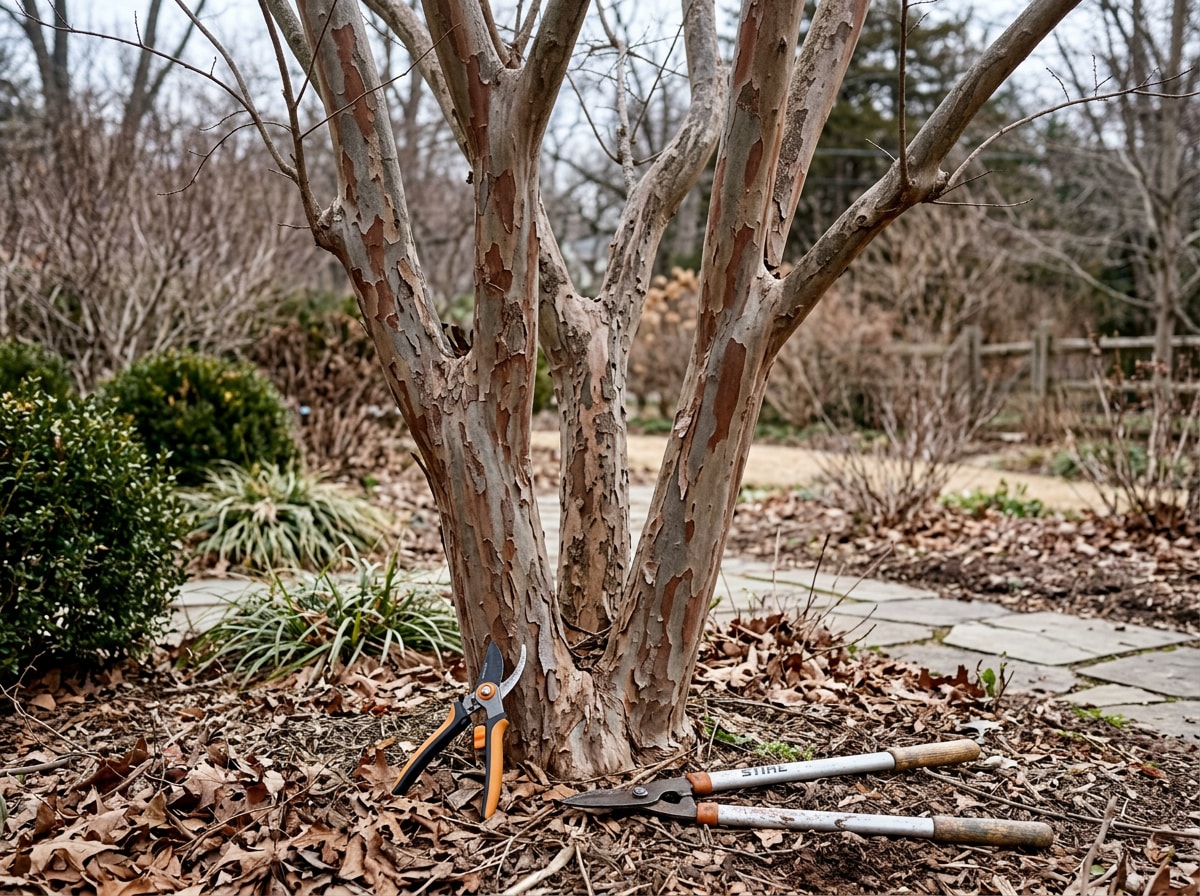
- Bypass hand pruners for anything pencil-width or smaller
- Loppers for mid-size branches up to about an inch and a half
- Pole saw or small chainsaw for trunk wood thicker than that
Using a tool that's too small for the branch leaves a ragged cut that heals slowly and invites disease. Clean, sharp blades matter too; wiping them down between cuts on diseased wood helps keep problems from spreading tree to tree.
Avoiding "Crepe Murder" (Topping)
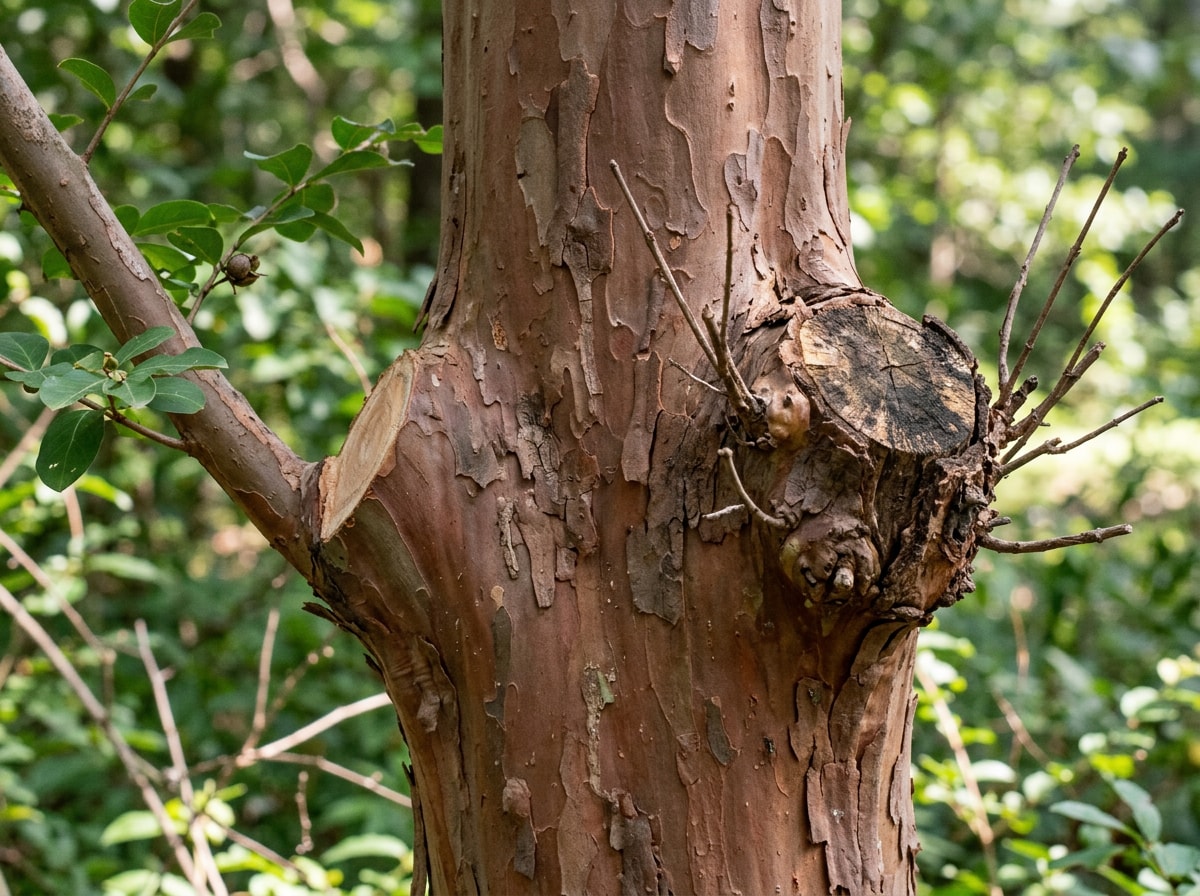
Topping, flat heading cuts that chop a tree back to stubs, is the single most common mistake with this species. It's not a style choice. It's damage.
Topping forces the tree to burn stored energy regrowing shoots that attach weakly to the stub. Those shoots snap easily in storms, and the wounds left behind make the tree more susceptible to disease and pests. Research from NC State Extension links topped crepe myrtles to shorter bloom time, delayed flowering, and weaker branching compared to properly thinned trees.
There's a pest angle too that most trimming guides skip. Crapemyrtle bark scale, a relatively recent arrival in South Carolina, tends to show up more aggressively on stressed, repeatedly topped trees. Clemson's extension office has been tracking the insect on crape myrtles and a short list of other host plants across the state. Keeping a tree properly pruned instead of topped is one of the simpler ways to avoid giving that pest an opening.
For trees that have already been topped for years and developed those swollen, knobby cut points, there often isn't a quick fix. In the worst cases, tree removal and a fresh start with a better-suited cultivar is the more honest answer than trying to retrain years of bad cuts.
DIY vs. Hiring a Professional
Size and access drive this decision more than anything else.
| Tree Size | Typical Height | Best Approach | Rough Cost Range |
|---|---|---|---|
| Shrub-form | Under 10 ft | DIY with hand pruners | $80 – $150 |
| Single or multi-trunk | 10–20 ft | DIY possible with loppers/pole saw, or hire out | $150 – $300 |
| Mature tree-form | 20–30+ ft | Professional crew with proper equipment | $300 – $475+ |
Those figures line up with what homeowners typically report paying across the Southeast for crepe myrtle work specifically, since the species is smaller and less complex to trim than oaks or pines.
If you do hire out, confirm the crew follows ISA-aligned pruning standards rather than just running a hedge trimmer down the top. The International Society of Arboriculture's consumer resource site has a short list of questions to ask before you book anyone.
For Pendleton properties, request a free estimate and we'll size up the trees on-site rather than quoting blind over the phone. It's a faster way to get an accurate number than guessing from a size chart.
FAQ
What month should you trim crepe myrtles?
Mid-February through early March is the target window in the Upstate SC area. That falls during dormancy, just before new growth begins, so the cut won't trigger tender growth ahead of a late frost.
Is it necessary to prune a crepe myrtle every year?
No. Pruning isn't required for survival, and a well-placed crape myrtle with room to grow often needs only light, occasional structural work. Skipping a year won't hurt the tree; it just means branch spacing gets tighter over time.
Can you over-prune a crepe myrtle?
Yes. Cutting structural branches thicker than a finger, or flattening the canopy every year, forces weak regrowth, which is exactly how "crepe murder" trees end up with those swollen knobs at the cut points.
What happens if you don't trim your crepe myrtle at all?
The tree won't die from neglect. A dense, untrimmed canopy can trap moisture and invite powdery mildew or crowd out airflow, but that's an aesthetic and bloom-quality tradeoff, not a health emergency.
Should I remove the seed heads after flowering?
Only if you can reach them easily. Clemson HGIC notes that cutting seed heads back to a lateral bud in late winter can tidy up appearance, but on a tall, mature tree it's fine to let them drop naturally.
How much does it cost to trim a crepe myrtle in Pendleton, SC?
Most homeowners pay somewhere between $80 for a small shrub-form tree and $475 or more for a large, hard-to-access tree. Exact pricing depends on size, number of trunks, and whether debris hauling is included, so an on-site look is the only way to get a real number.
Crepe myrtles are forgiving trees if you respect the two basics: cut in late winter, and cut with purpose instead of just chopping for height. If your trees in Pendleton, Oconee County, or anywhere in between are overdue for a proper trim, visit Argus Forestry or get a free estimate and we'll handle it right the first time.