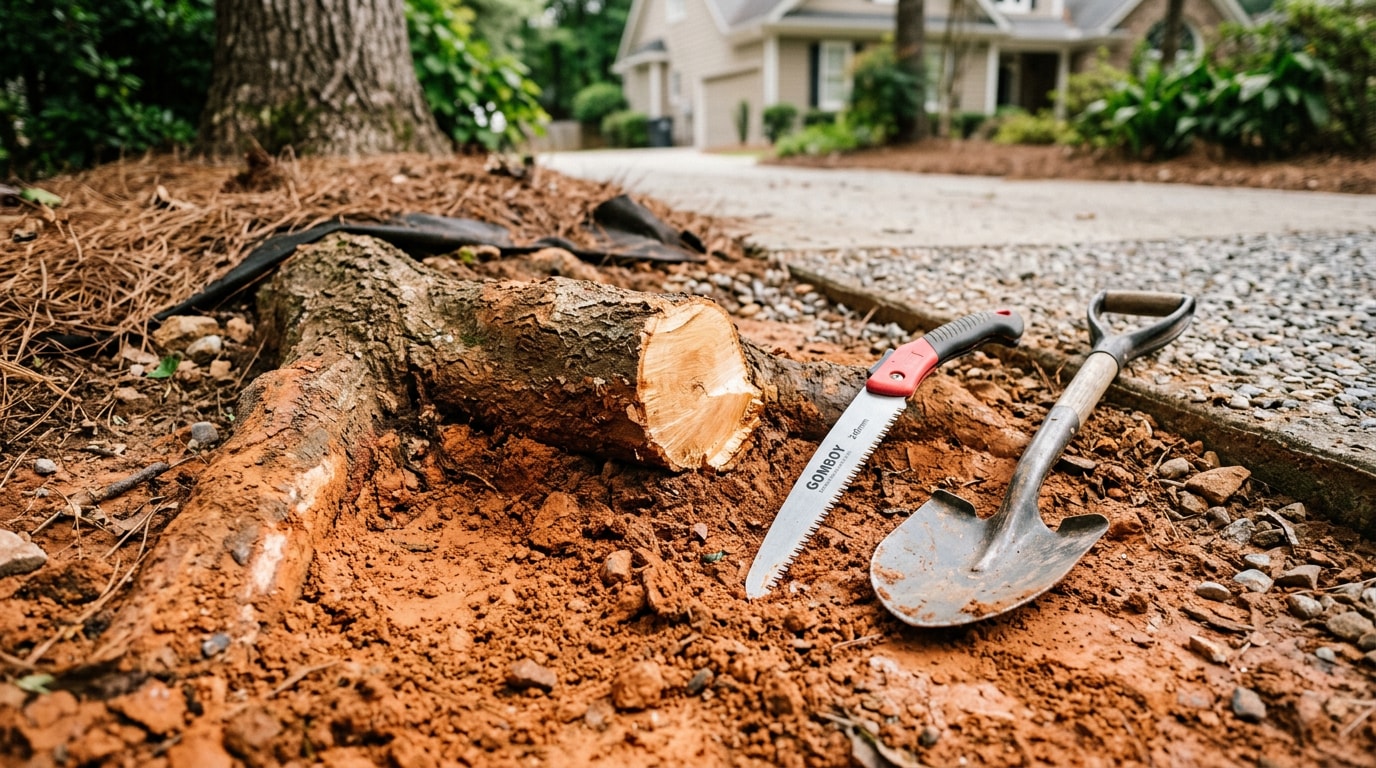
If you're searching for tree removal and stump grinding near me in Clemson, SC, you're probably staring at a leaning oak, storm damage from last week's wind, or a stump that won't let you mow in a straight line. Clemson's clay soil, humid summers, and mix of older in-town lots near campus mean trees come down more often than most homeowners expect. This guide walks through what a professional crew actually does, what it costs in 2026, and whether the city requires a permit before anyone touches a chainsaw.
Tree Removal and Stump Grinding Services Near Clemson, SC
A full-service crew in this area should cover more than just cutting a trunk down. Our teams at Argus Forestry handle tree removal, stump grinding, tree trimming, and storm cleanup for homes and businesses throughout Clemson and the surrounding Upstate.
Storms don't wait for business hours, and neither should your tree service. We offer round-the-clock emergency tree removal and storm cleanup throughout the Upstate, including Clemson and Seneca, so a tree on the roof at 2 a.m. doesn't have to wait until Monday.
If you're near Clemson, we also serve Seneca, Pendleton, Six Mile, and the rest of Oconee County. You can see our full coverage area and request a quote from the Argus Forestry homepage.
Why Clemson Homeowners Need a Professional Crew, Not a Rental Grinder
Pulling a stump yourself with a rented machine sounds doable until you're two hours in and the engine stalls on a root. A professional crew brings training, insurance, and commercial equipment that turn a weekend-long struggle into a job measured in minutes, not days.
Safety Rules Most DIY Jobs Skip
A standing stump isn't just an eyesore. Hidden root systems can run into septic lines or buried utilities, and a grinder throws wood chips and debris at high speed.
The Occupational Safety and Health Administration maintains general industry standards specifically for the tree care sector, covering everything from recordkeeping to field hazards. Tree care hazards are addressed in specific OSHA standards for recordkeeping and general industry, and OSHA highlights standards and documents related to the tree care industry.
Here's a detail most local "near me" pages skip: tree removal and tree trimming aren't regulated the same way. Tree trimming, meaning the removal of limbs and branches without taking down the tree itself, does not fall under the Logging Operations standard because it doesn't involve cutting down trees. Full tree removal, depending on scope, can fall under that same logging standard. Most DIY operators have no idea which rules apply to their own job, let alone how to follow them.
Commercial Equipment vs. a Rental Unit
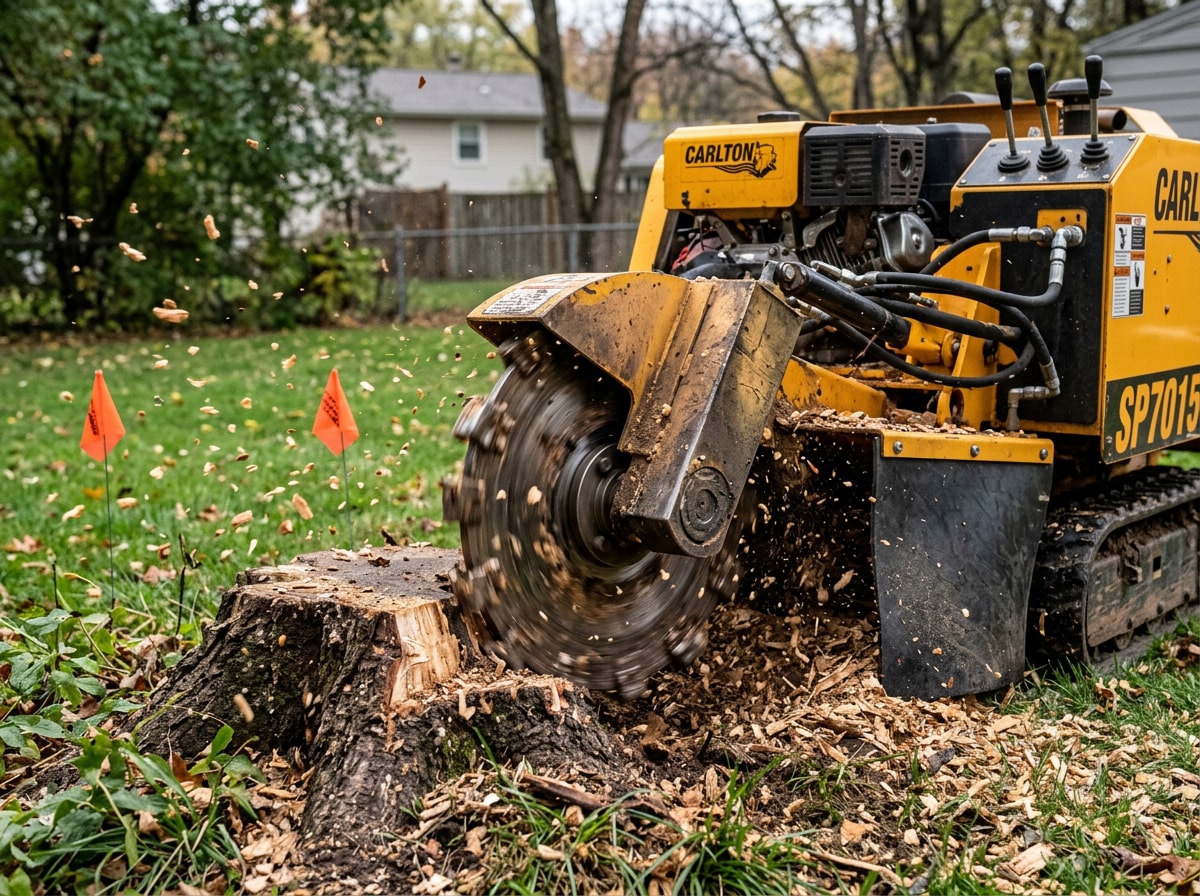
Rental stump grinders are built for light, occasional use. Commercial-grade machines run carbide-tipped wheels that chew through hardwood roots and rocky clay without dulling after one pass, which means fewer passes and a cleaner finished hole. A rental unit might take three hours and still leave root fragments behind; a commercial crew typically finishes the same stump in well under an hour.
Preventing Regrowth: Grinding Isn't the Only Method
Grinding works because it destroys the stump's cambium layer, the thin tissue under the bark that drives new growth. Once that layer is gone, the stump can't send up suckers, even though most of the root system stays in the ground and simply decomposes over time.
Grinding isn't the only way to stop regrowth, though, and this is where species matters. Clemson Cooperative Extension's own guidance on removing resprouting species like Bradford pear notes that cut stumps should be immediately treated with an herbicide, such as glyphosate or triclopyr, to ensure that the stumps and large roots don't resprout . For aggressive resprouters, a cut-and-treat approach can be a faster, cheaper alternative to full mechanical grinding, which is worth asking your crew about before you pay for grinding you may not need.
Our Tree Removal and Stump Grinding Process
Every reputable crew follows roughly the same sequence, whether you found us by searching tree removal and stump grinding near me Clemson, SC or got a referral from a neighbor.
- Site assessment and consultation. A technician measures the stump's diameter, checks the species, and confirms utility and irrigation lines are marked before equipment touches your yard.
- Tree removal (if needed). For standing trees, crews plan the cut path, rigging, and drop zone. Large trees near structures or power lines often require crane work for a controlled, safe takedown.
- Grinding. Standard residential grinding runs 6 to 12 inches below grade, enough to mow or landscape over without hitting wood. Projects involving replanting or new construction often call for deeper grinding, sometimes 18 to 24 inches, so roots don't interfere with foundation work.
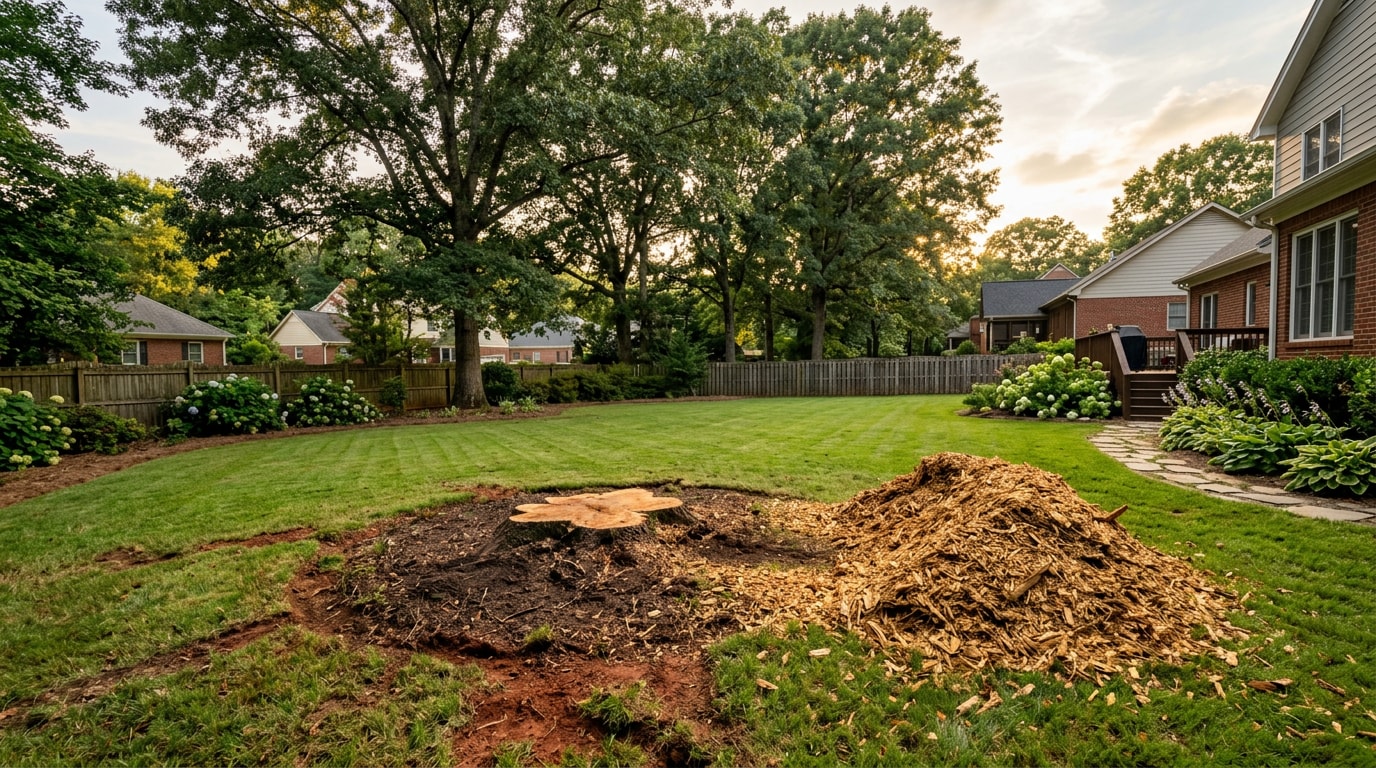
- Site restoration. Wood chips can be left in the hole as mulch, hauled off as debris removal, or used to backfill the hole with topsoil, depending on your preference.
Most Clemson companies, including ours, provide a free estimate so you can compare pricing before committing to anything. Request a free quote and a crew can walk the site with you first.
Stump Grinding vs. Stump Removal: Which Do You Need?
Not every stump needs the same treatment. The right choice usually comes down to what you're planning to do with the space afterward.
| Factor | Stump Grinding | Stump Removal |
|---|---|---|
| Cost | Lower | Higher |
| Time | 30 to 60 minutes | Half a day or more |
| Yard disruption | Minimal | Significant |
| Best for | Lawns, general landscaping | Construction, driveways, new plantings |
| Leftover roots | Decompose in place | Fully excavated |
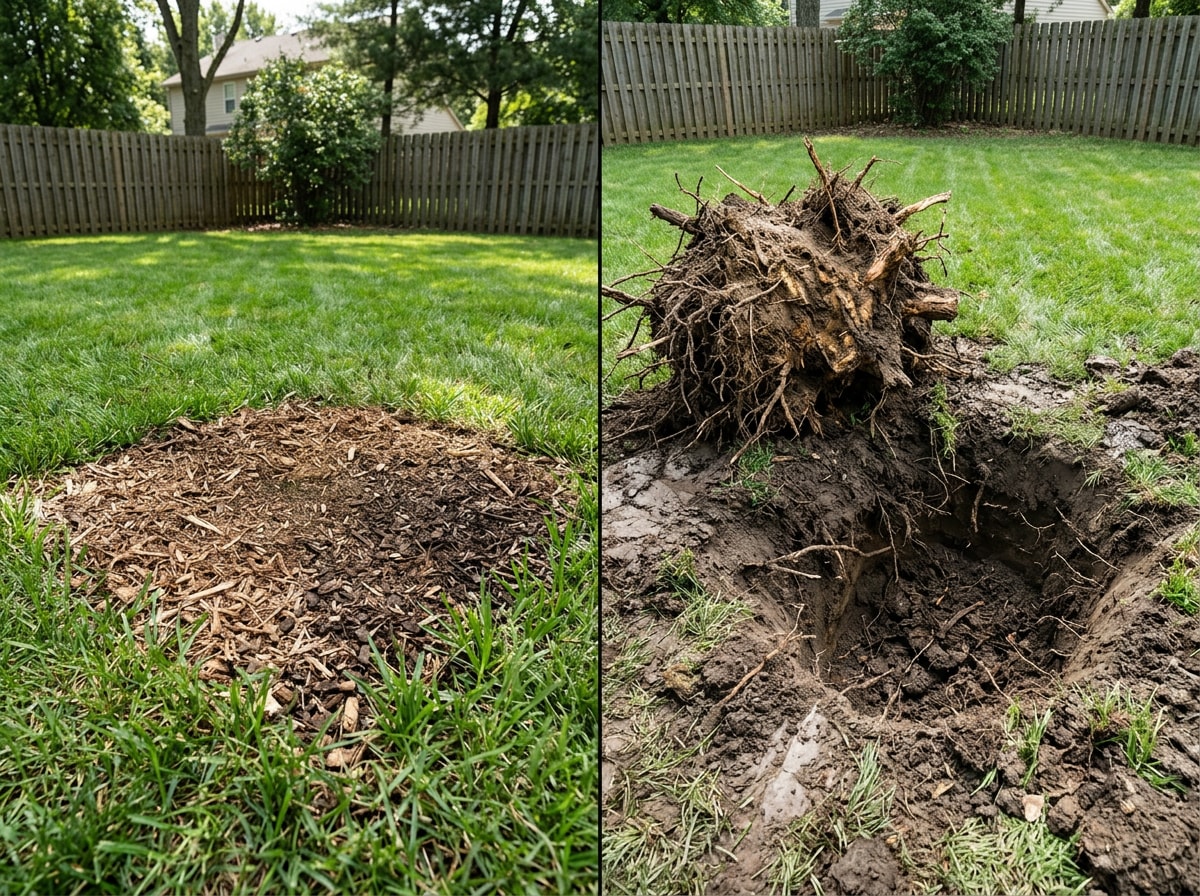
Grinding benefits homeowners who just want the stump gone without tearing up the yard, since the equipment works downward in place rather than pulling the whole root mass out. Full removal involves digging out the entire root ball and is worth the extra cost when you're planning a driveway, foundation work, or anything requiring site preparation where leftover roots could cause problems later.
2026 Cost Guide: Tree Removal and Stump Grinding in Clemson, SC
Pricing is usually the deciding factor for homeowners comparing options, partly because tree removal and stump work are almost always quoted separately.
| Service | Typical Price Range | What Affects Cost |
|---|---|---|
| Small tree removal | Low hundreds | Size, access, debris hauling |
| Large or hazardous tree removal | Four figures | Height, proximity to structures, crane needs |
| Emergency/storm removal | Higher than scheduled work | After-hours response, immediate scheduling |
| Stump grinding | Often priced per stump or per diameter inch | Stump size, root spread, depth needed |
| Full stump removal | More than grinding | Excavation, backfill, disposal |
A tree leaning over a roof costs more to remove safely than one standing in an open yard, since it usually requires slower, more careful rigging. Emergency tree removal also runs higher than scheduled work, since after-storm jobs require immediate crews and equipment.
One thing to confirm before signing anything: not every company includes stump work in their base tree removal price. Ask whether grinding is bundled or billed as a separate line item, since this is where quotes can look cheaper than they actually are.
Do You Need a Permit to Remove a Tree in Clemson, SC?
This is the question most generic tree-service pages skip entirely, and it matters more in Clemson than in a lot of South Carolina towns. For the last 13 years, the City of Clemson has had the honor of being named a Tree City USA by the Arbor Day Foundation , and that status comes with an active tree care ordinance, not just a plaque on a wall.
Under that ordinance, a Tree Removal Permit exists to document proper implementation of the city's tree standards , and removing a Protected Tree without first obtaining written authorization, including all necessary permits, from the city is not allowed . In practice, this mostly affects larger, older, or city-designated trees rather than every tree on a residential lot, but it's worth a quick call to the city before removing anything that looks mature or historic. A reputable local crew should flag this for you during the site assessment rather than let you find out after the stump is already ground down.
Cutting down trees near a property line or shared fence raises a similar issue. If you're unsure whether a tree is fully on your property, our guide on tree and shrub removal in Sunset, SC covers how boundary trees are typically handled before work begins.
Looking to save a mature tree instead of removing it? Our tree spade rental guide for Clemson, SC walks through transplanting as an alternative to cutting it down.
When a Stump Is Only Part of the Job
Sometimes a single stump is the easy part, and the real project is clearing a lot, prepping a building site, or cleaning up after a storm took down several trees at once. For bigger jobs, our lot clearing and land clearing crews handle multi-tree removal and grading together, so you're not paying for separate mobilizations. Checking a company's insurance and track record matters here too. Verifying insurance and asking about a company's safety track record before hiring is standard advice from the Tree Care Industry Association, and it's worth doing even for a routine job. Disreputable companies are known for ripping gutters off, breaking fences and bird baths, and dropping trees on houses, then folding up and disappearing.
Get a free estimate before you commit to anyone, and ask specifically what's included: hauling, chip disposal, and site cleanup should all be spelled out in writing.
FAQ
How deep do you grind a stump?
Most residential grinding goes 6 to 12 inches below grade, which is deep enough for mowing and general landscaping. Projects involving replanting or construction often require 18 to 24 inches so roots don't interfere with new foundations. Your technician confirms the right depth during the site assessment.
Is it cheaper to grind a stump or remove it completely?
Yes. Grinding requires less time, lighter equipment, and no root ball excavation, which keeps labor costs down. Full removal costs more because it involves digging out the entire root system and backfilling a larger hole.
Will the stump grow back after grinding?
No. Grinding destroys the cambium layer that drives new growth, so the stump can't resprout even though lateral roots remain underground and simply decompose over time. Aggressive resprouting species like Bradford pear sometimes need an herbicide treatment on the cut stump instead of, or in addition to, grinding.
What happens to the wood chips after grinding?
Wood chips can go three ways: hauled away as debris, left on-site as mulch, or used to backfill the hole. Most crews ask your preference before starting.
Do I need a permit to remove a tree in Clemson, SC?
Sometimes. Clemson's tree ordinance protects certain trees on private and public property, and removing a designated Protected Tree requires a Tree Removal Permit and written city authorization. Most routine residential removals of smaller, unprotected trees don't trigger this, but it's worth a quick check with the city before cutting anything large or old.
How much does emergency tree removal cost compared to scheduled work?
Emergency removal typically costs more than a scheduled job because it requires immediate crew and equipment dispatch, often after a storm when demand is highest. Scheduling routine removal or trimming before storm season can help you avoid paying emergency rates later.