Tree and shrub removal in Sunset, SC gets complicated fast once you factor in Lake Keowee lots, Table Rock overlooks, and the pine-oak canopy that drops limbs every time an Upstate storm rolls through. This guide breaks down the real removal process, current cost ranges, and the exact warning signs that mean a tree or hedge has to come out instead of just getting trimmed back. Skip the guesswork and know what a Pickens County crew should be telling you before the chainsaws start.
Tree Removal in Sunset, SC: What the Process Looks Like
Pickens County's wooded lots are full of mature pines, oaks, and poplars that look great until one starts leaning toward the house.
Upstate South Carolina gets hit by severe thunderstorms and the occasional tropical remnant pushing up from the coast.
Either one can weaken a root system or snap limbs that turn a healthy tree into a hazard overnight.
That's usually the call that starts a tree removal job in Sunset.
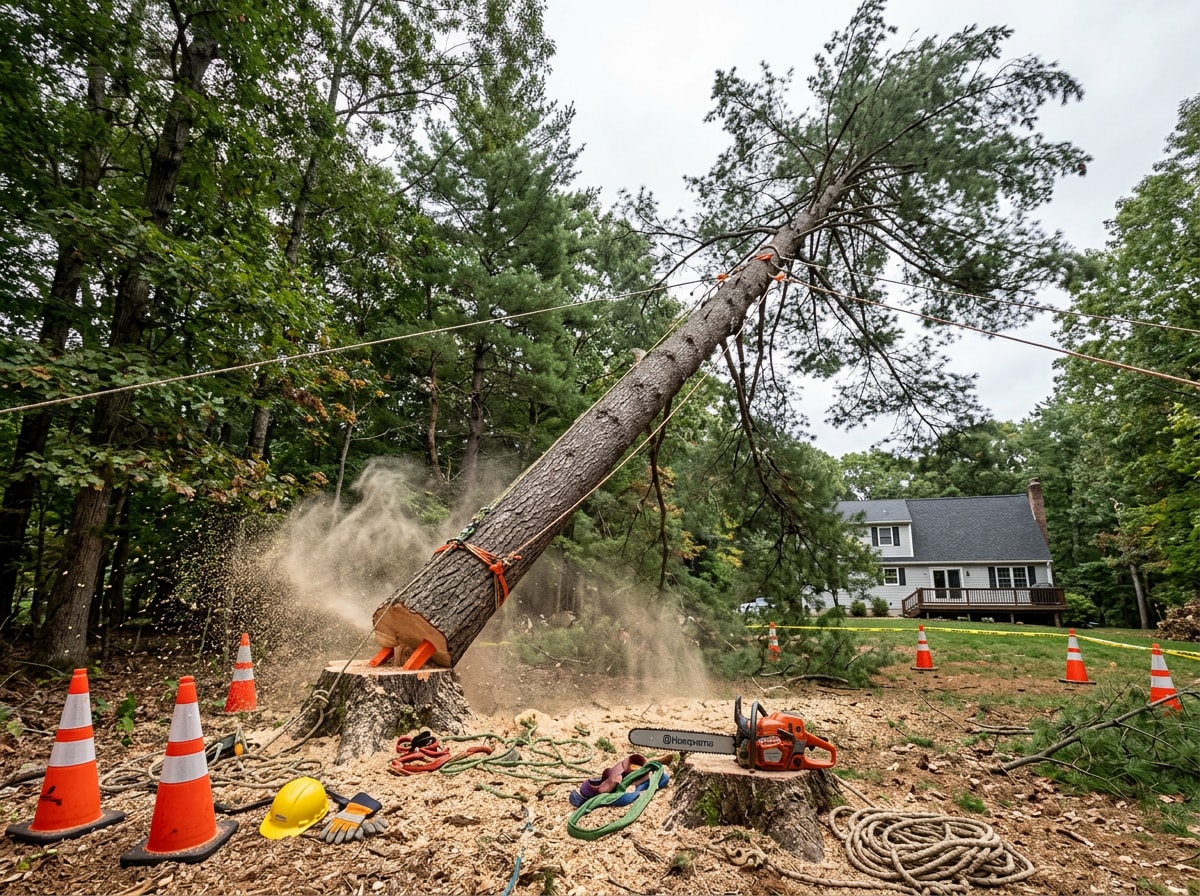
A professional removal generally follows the same three stages no matter the species:
- Inspection — a trained crew checks the lean, the root flare, and nearby obstacles like power lines, fences, or the house itself before deciding how the tree will come down.
- Felling or rigging — large trees near a structure are usually taken down in sections, lowered with ropes, rather than dropped whole.
- Cleanup and hauling — logs, brush, and debris get cleared so the yard is usable again, not just empty.
Pines and oaks common to this part of Pickens County can grow 60 feet or taller, so this isn't a weekend chainsaw project. Falling limbs, struck-by incidents, and contact with power lines are among the hazards federal regulators specifically call out in tree care work. Tree care operations such as trimming and removal expose workers to hazards including falls from elevation, struck-by objects, lacerations, and contact with energized power lines. A licensed tree removal crew carries the training and rigging equipment to manage that risk; a homeowner with a chainsaw usually doesn't. If a tree is already leaning hard or cracked after a storm, that's an emergency tree removal situation, not a wait-and-see one.
Signs a Tree Needs to Come Down
A tree likely needs removal, not just pruning, if it shows any of the following:
- Dead or bare branches across most of the canopy
- A deep trunk crack or split
- Fungal growth (mushrooms or conks) at the base
- Visible root damage or soil heaving near the trunk
- A sudden lean that wasn't there last season
- Bark peeling away in sheets
- A hollow sound when you tap the trunk
Clemson Extension's seven-point tree check-up flags several of these as red flags for structural failure. Mushrooms or conks on branches, trunks, or at the base of the tree indicate advanced decay and a high probability of tree failure. None of these signs alone automatically means a tree is a lost cause, which is why a certified arborist credentialed by the International Society of Arboriculture with a Tree Risk Assessment Qualification can tell the difference between a tree that needs removal and one that just needs corrective pruning. If you're seeing two or three of these signs at once, get a free estimate before storm season tests the tree further.
Shrub and Hedge Removal in Sunset, SC
Shrub removal gets lumped into "tree service" quotes, but it's a different job with its own warning signs:
- The shrub or hedge has died back and isn't recovering with pruning
- Disease or pest damage is spreading to neighboring plants
- Roots are pushing into a foundation, driveway, septic line, or irrigation run
- The hedge has grown so large that trimming no longer controls its shape or safety
If a hedge still has healthy growth and just needs shape, tree and shrub trimming is the cheaper fix. Full removal makes sense once roots start competing with utilities or the plant has outgrown the space it's in. Hedges made up of many individual shrubs along a property line usually get priced per linear foot instead of per plant, which is worth asking about before you get a quote for "shrub removal" one bush at a time. Crews typically bundle the cut material into one hauling trip through debris removal rather than billing separate trips per shrub.
Tree Stump Removal in Sunset, SC
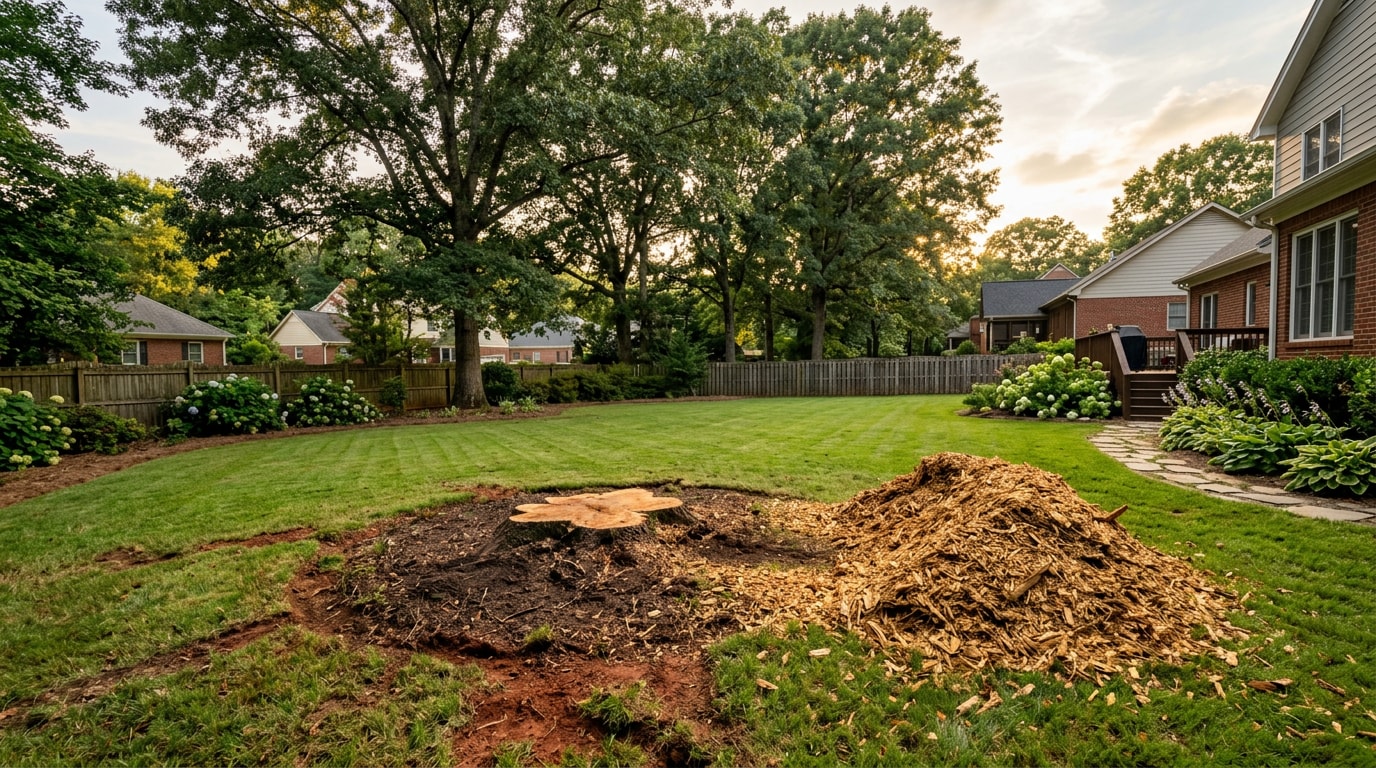
Once a tree is down, the stump left behind isn't just an eyesore. It can sprout new shoots, attract termites and other wood-boring insects, and become a tripping hazard in the yard.
That's why most homeowners pair tree removal with stump grinding.
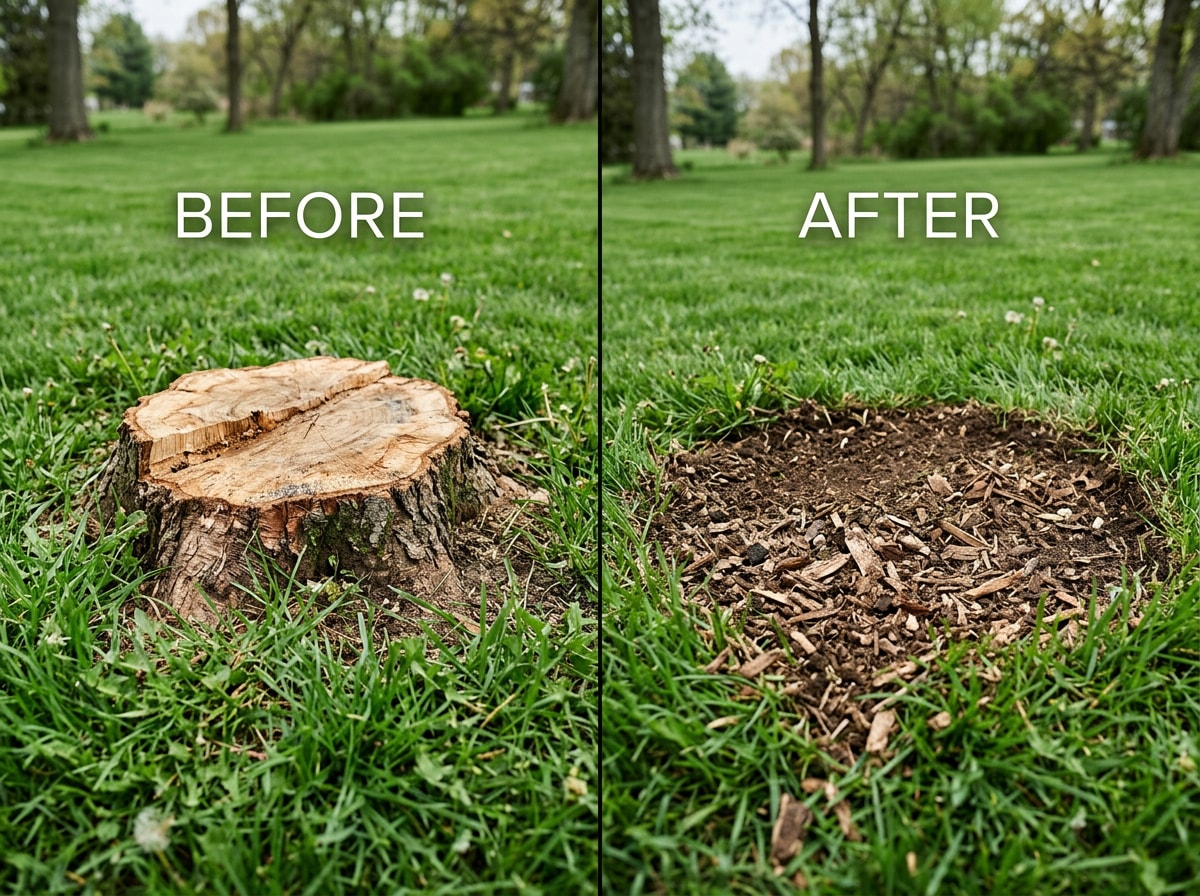
Stump grinding chews the stump down several inches below grade, leaving the root ball in place but out of sight and mowable. Full stump removal pulls the entire root system out, which takes longer and costs more but clears the ground for new landscaping, a shed pad, or a driveway extension. Many Pickens County crews bundle grinding into the original tree removal quote; others price it separately based on stump diameter and root spread, which the cost section below breaks down.
What Tree and Shrub Removal Costs in Sunset, SC
National cost data for shrub removal runs roughly $25 to $350 per plant depending on size and root depth, while mature tree removal typically falls between $400 and $1,200 or more. Hourly rates for crews that bill that way land somewhere between $50 and $125 an hour. Those are broad national ranges — actual Sunset quotes shift based on access, canopy density, and how many plants or trees are involved in one visit.
Shrub and Bush Removal Cost by Size
| Shrub/Plant Size | Typical Cost Range |
|---|---|
| Small shrub (under 3 ft) | $25–$75 |
| Medium shrub (3–6 ft) | $75–$150 |
| Large shrub/hedge (6–10 ft) | $150–$300 |
| Extra-large shrub or small tree | $300–$450 |
| Per linear foot of hedge | $10–$40 |
Tree Removal Cost by Size
| Tree Height | Typical Cost Range |
|---|---|
| Small (under 30 ft) | $200–$500 |
| Medium (30–60 ft) | $500–$1,200 |
| Large (60–80 ft) | $900–$2,000 |
| Extra-large (80+ ft) | $1,600–$3,000+ |
What Pushes the Price Up or Down in Sunset
Access matters more here than in a typical suburban yard. Many Sunset properties sit on wooded acreage near Lake Keowee or Table Rock with long gravel driveways, steep grades, or limited equipment access, all of which can add to a quote regardless of national averages. A tree that's 200 feet off the road with no truck access costs more to remove than the same tree next to a paved driveway, no matter what a generic online calculator says.
A few other variables that move the number:
- Species and wood density — hardwoods like oak take longer to cut and haul than softer pines or cedars; our cedar clearing cost breakdown for Walhalla, SC covers how species-specific density changes a quote.
- Root system removal — shallow, compact roots are quick work; roots tangled with a foundation or septic line require hand-digging and cost more.
- Soil type — Upstate clay is tough to dig through, especially after a dry stretch.
- Accessibility — tight side yards, slopes, or fences that block equipment add labor time.
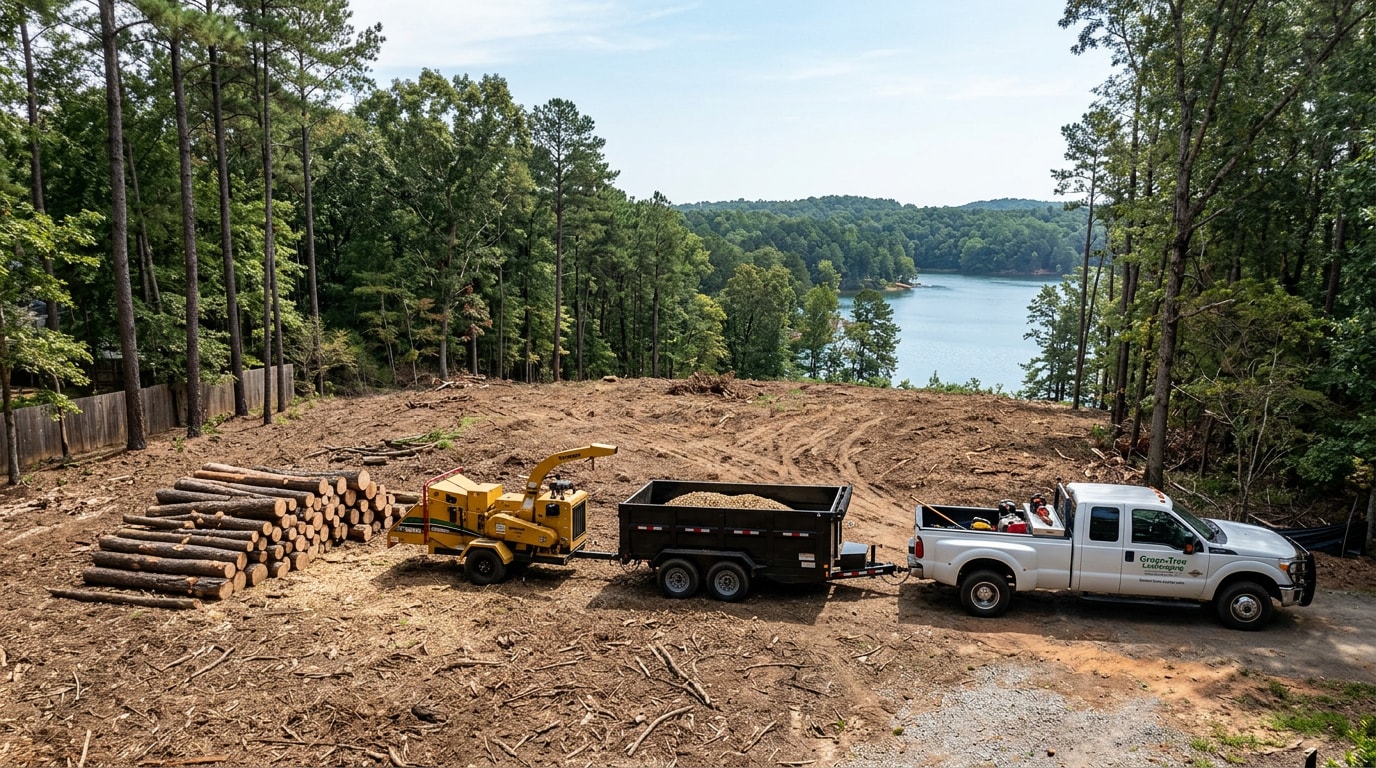
- Debris hauling — many quotes separate felling from hauling logs, branches, and mulched material, so ask upfront whether disposal is included.
- Stump add-ons — grinding or pulling the stump is usually billed separately from the tree removal itself.
DIY vs. Hiring a Professional for Tree and Shrub Removal
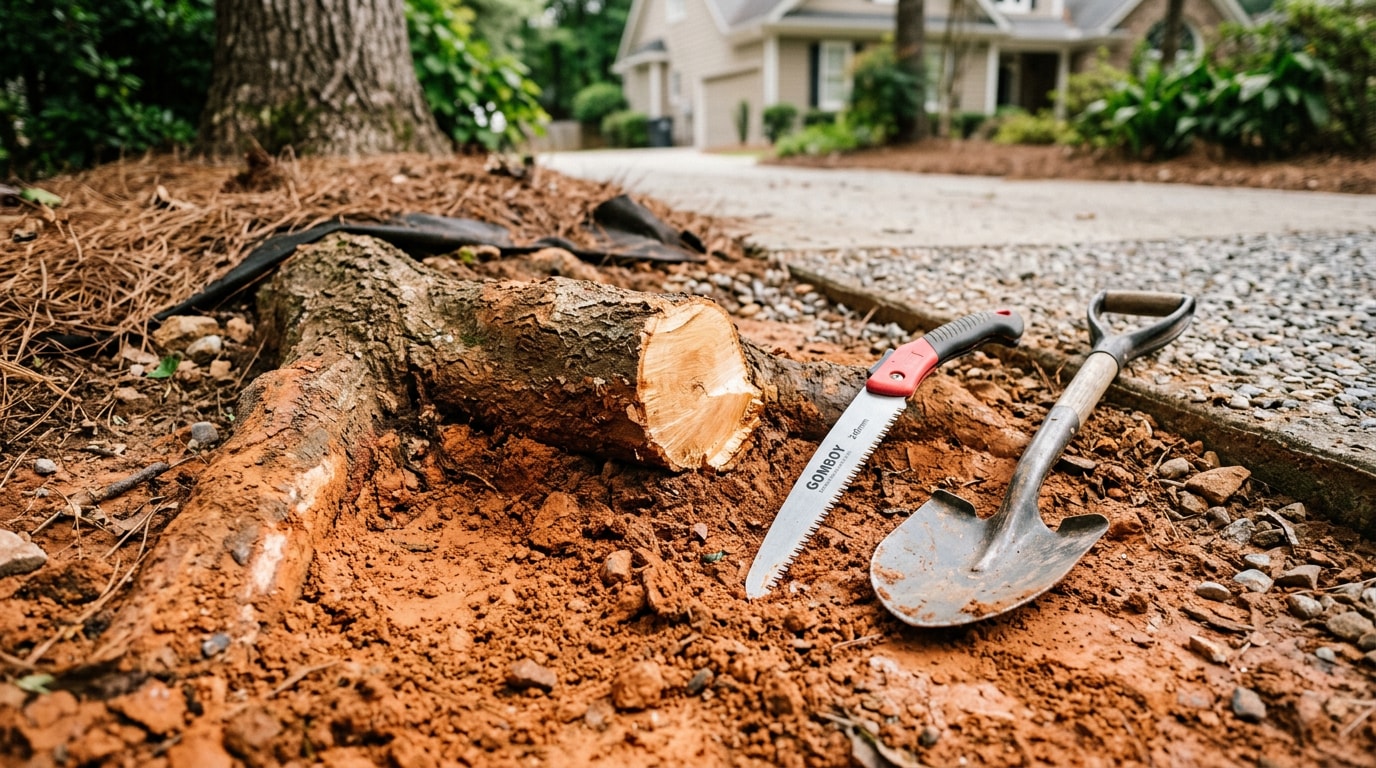
DIY shrub removal can make sense for a small, accessible bush with shallow roots. A shovel, loppers, and a couple of hours will usually get it out. Renting a stump grinder or a box truck for hauling adds cost fast, and DIY tree removal estimates often skip the price of saws, safety gear, and dump fees that can rival a professional quote once everything's tallied.
For anything taller than a single story, growing near power lines, or leaning toward a structure, hire a professional. South Carolina's own forestry agency puts it plainly: pruning or removing trees, especially large trees, can be dangerous work , and removal should be a last resort rather than a first instinct for a tree that still has some health left in it. Our crews see this firsthand on Lake Keowee lots every storm season: the jobs that cost the least are almost always the ones where someone called before the lean got worse, not after a limb came down on the dock.
A few ways to trim cost without cutting corners on safety: bundle multiple shrubs or trees into one visit, schedule removal in the off-season between late fall and winter when demand is lower, and ask whether stump grinding or debris hauling can be rolled into one quote instead of billed as separate trips. If a storm has already dropped limbs across the yard, storm cleanup is usually faster and cheaper than treating it as a brand-new removal job. Argus Forestry covers Sunset and the surrounding Pickens County area, and you can see the full range of services on the Argus Forestry homepage.
FAQ
When should you remove a bush or hedge instead of pruning it?
Remove a bush or hedge if it has died, shows disease or pest damage that could spread to nearby plants, or has grown so large that pruning no longer controls it safely. Roots pushing into a foundation, driveway, or septic line are another clear signal it's time to take the plant out rather than keep trimming around it.
How do I know if a tree is dangerous?
A dangerous tree typically shows a recent lean, deep cracks running down the trunk, large patches of dead bark or missing canopy, mushrooms or conks at the base, or visible root damage. Any of these near a house or power line is reason to get a professional risk assessment quickly rather than wait for the next storm.
Do you need a permit to remove a tree or shrub in Sunset, SC?
South Carolina has no statewide permit requirement for removing a tree on private residential property, and Pickens County does not enforce a general tree-removal permit for homeowners. That said, local ordinances vary a lot across the state. Some SC towns require a permit for "grand" or protected trees above a certain trunk diameter; a town-issued permit is required to remove a grand or protected tree, while non-protected trees can be removed without a permit in jurisdictions with this kind of rule. Check with Pickens County or the Town of Sunset before cutting down a large, old, or heritage-sized tree, especially one near a protected watershed area.
Is tree or shrub removal cheaper in winter?
Often, yes. Late fall through winter is typically the slower season for tree crews, which can mean more scheduling flexibility and occasionally a better rate, especially for non-emergency jobs. Trees are also easier to assess without full leaf cover, so a crew can spot structural issues more clearly.
Can I cut tree branches that hang over my property line in Sunset, SC?
Generally, yes. Under South Carolina property law, you can cut branches or roots on your side of the property line up to the line itself. You can't go onto a neighbor's property to cut their tree, and you're responsible for any damage your cutting causes to the tree's health.
How much does stump grinding cost in Sunset, SC after tree removal?
Stump grinding typically runs a few hundred dollars per stump depending on diameter and root spread, and it's often cheaper when bundled into the original tree removal quote instead of scheduled as a separate visit. Full stump and root removal costs more than grinding since it clears the ground completely rather than leaving the root ball in place.