Cedar clearing in Walhalla, SC almost always starts the same way: a fence line, pasture edge, or future building site that was clean a few years ago and is now a wall of eastern red cedar. The good news is that cedar, unlike oak or sweetgum, won't grow back from a stump once it's cut low enough, so the real question is which removal method gets you there fastest and cleanest. This guide covers the methods, 2026 price ranges, and the permit rules Oconee County expects before a machine shows up.
Why Eastern Red Cedar Takes Over Walhalla Properties
Eastern red cedar spreads fast once a pasture, fencerow, or roadside cut stops getting mowed or burned. Birds eat the berries and drop seed along fence lines, where the trees get just enough disturbed, sunny ground to take hold.
It's native to eastern North America and does particularly well on limestone-derived soils , and it tends to become a real nuisance on poorly managed or heavily grazed pasture and rangeland with neutral-pH soil — conditions that show up across a lot of old farmland in Oconee County. Our crews see it constantly on properties around Walhalla and the wider Oconee County area: a thin green line along a fence that's quietly turned into a 15-foot-tall thicket in under a decade.
Left alone, cedar doesn't just look bad. It shades out pasture grass, narrows sightlines along driveways and roads, and makes future site work (grading, building, septic) more expensive because every tree has to come out before the dirt work can start.
Does Cutting Cedar Actually Kill It for Good?
This is the question we get on almost every cedar job, and the answer is more encouraging than most tree removal questions. Cedar is a juniper, not a true cedar, and junipers don't resprout from a cut stump the way hardwoods do.
With mechanical removal methods, the key is making the cut below the lowest green branch . Do that, and the tree is done — no stump sprouts, no regrowth chasing you for the next three summers. That's a very different situation than a hardwood: we cover a similar question about canopy trees in our post on whether trimming kills an oak tree in Oconee County, where the biology — and the risk — works differently.
In practice, the method depends on how much cedar you're dealing with:
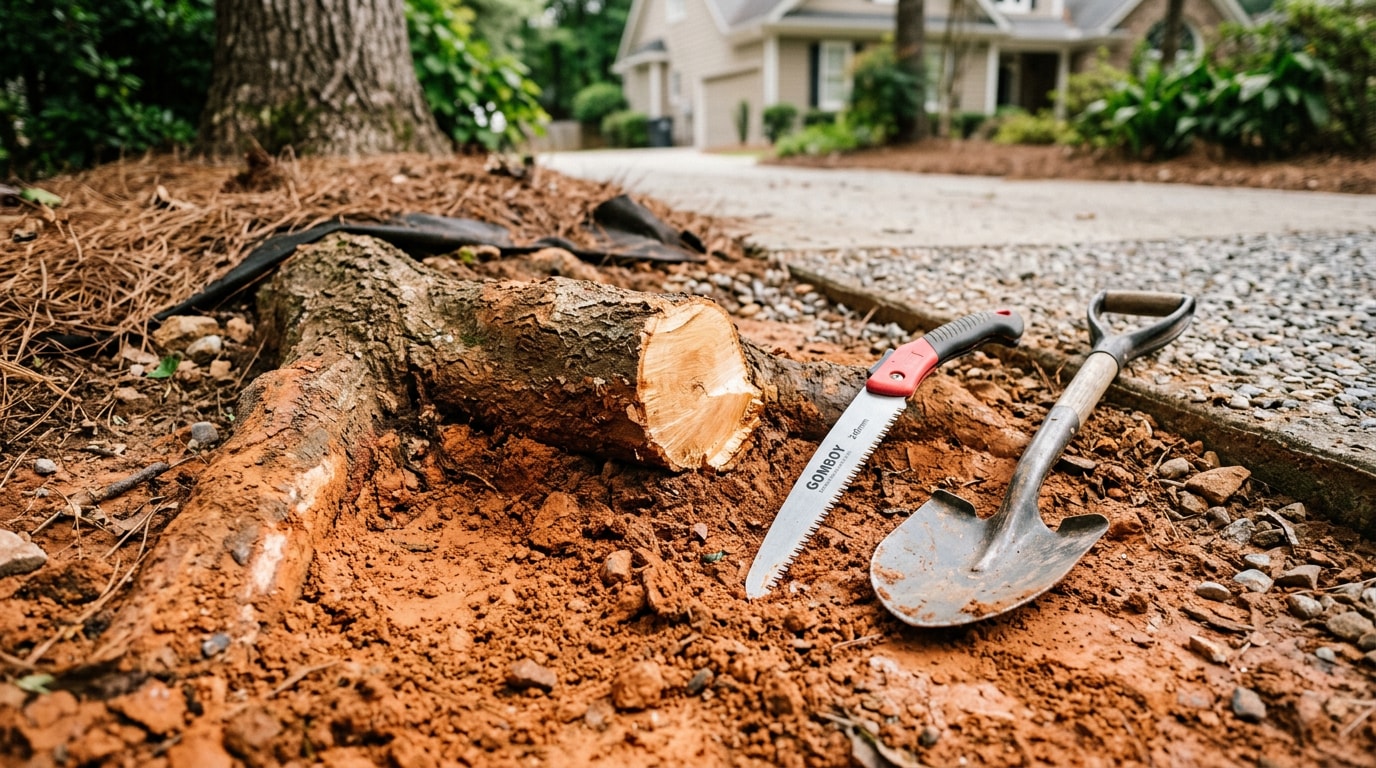
- Hand tools (loppers, pruning saws): fine for a handful of small trees under an inch in diameter
- Brush hog or rotary mower: works for large areas of small, scattered saplings
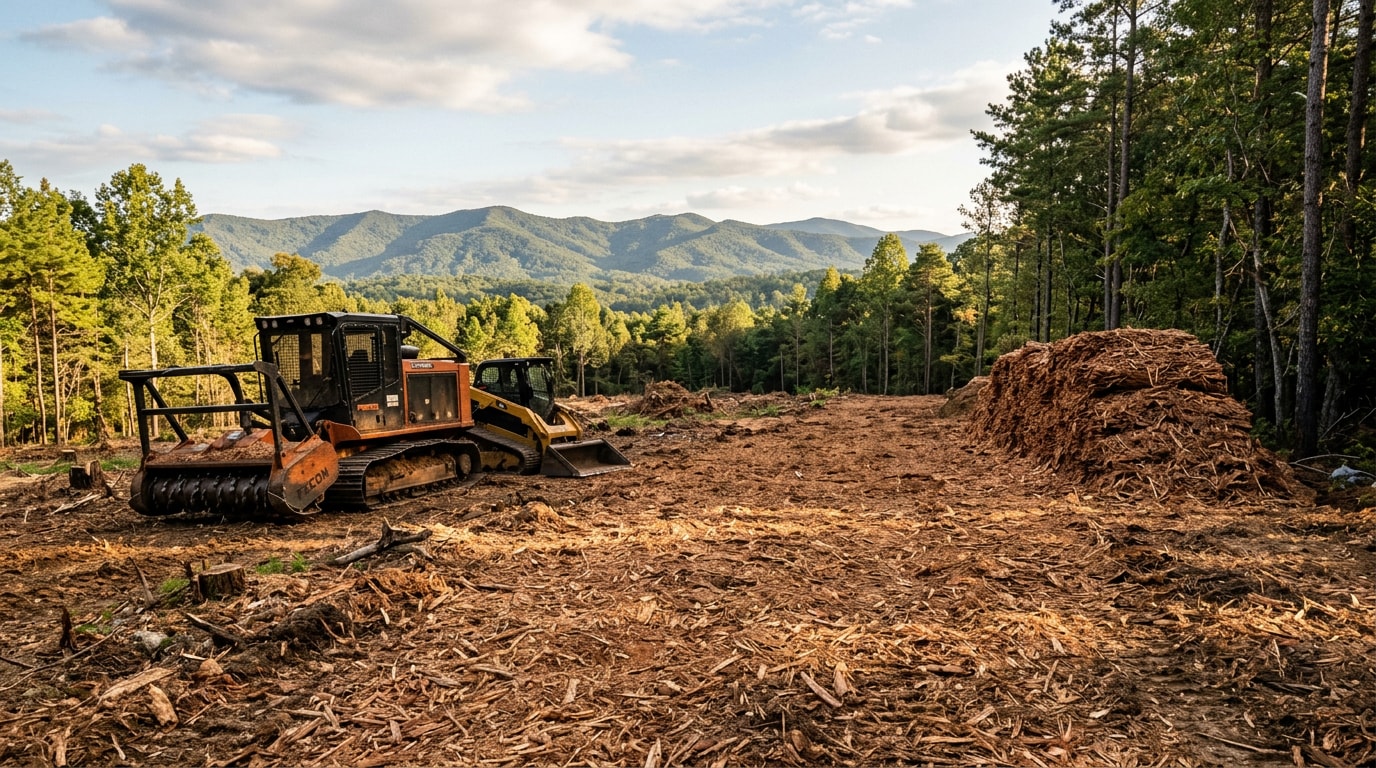
- Forestry mulching head: the standard for dense thickets, fence lines, and mixed brush
- Dozer with a shear or skid steer with a cutting attachment: needed once trees get larger or the stand is thick enough that a mulcher can't keep pace
For anything past a few scattered trees, hand tools stop being practical fast — that's usually where a call to a crew makes more sense than a weekend with a chainsaw.
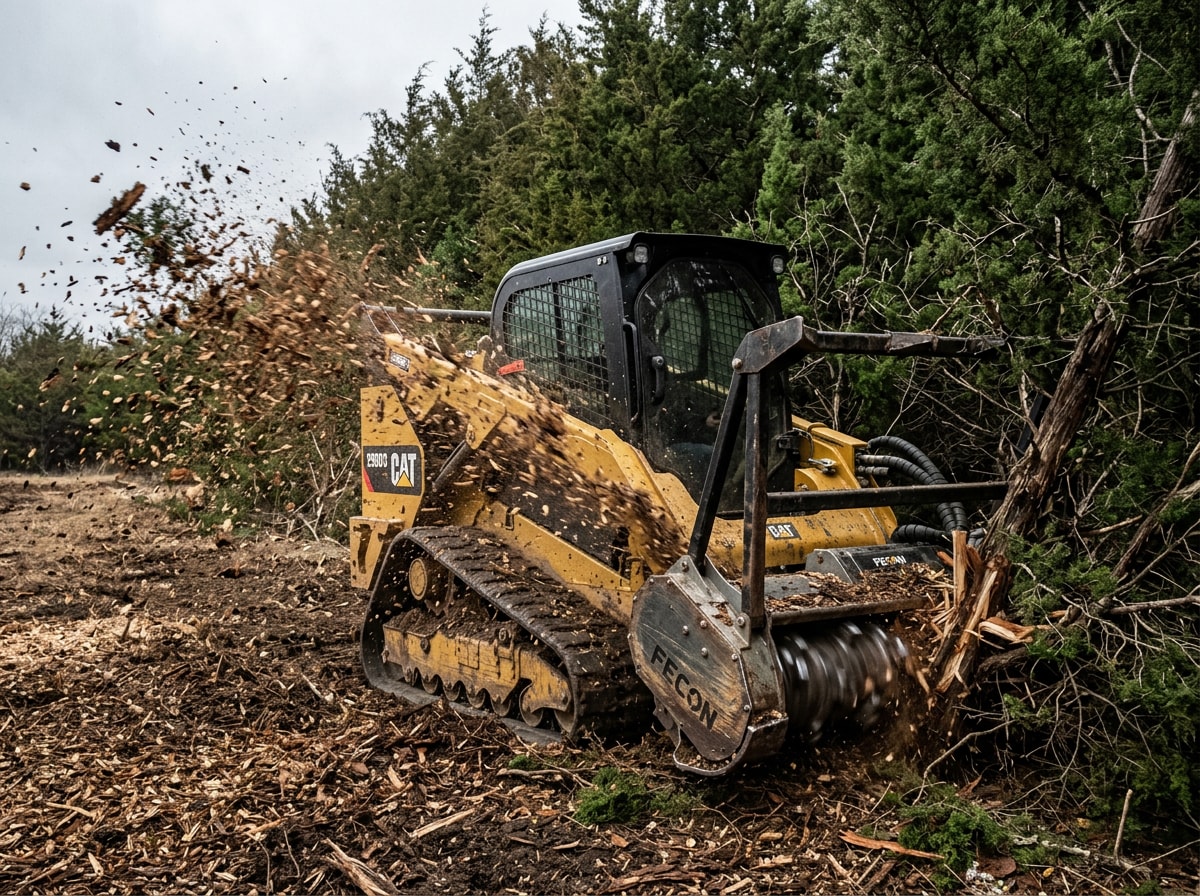
Forestry Mulching vs. Traditional Clearing for Cedar
Not every cedar job calls for the same equipment. Here's how the two main approaches stack up for a typical Walhalla property.
| Factor | Forestry mulching | Traditional clearing (dozer/shear + burn or haul) |
|---|---|---|
| Timeline | One pass, one crew, often same-day on smaller lots | Slower — separate felling, piling, and burning or hauling |
| Soil disturbance | Low — roots stay in place, mulch layer protects bare soil | Higher — root systems pulled, topsoil exposed |
| Debris handling | Ground into mulch on site, no hauling | Requires burn permits or debris hauling |
| Best fit | Fence lines, pasture reclamation, overgrown acreage | Sites that need to be completely bare for construction |
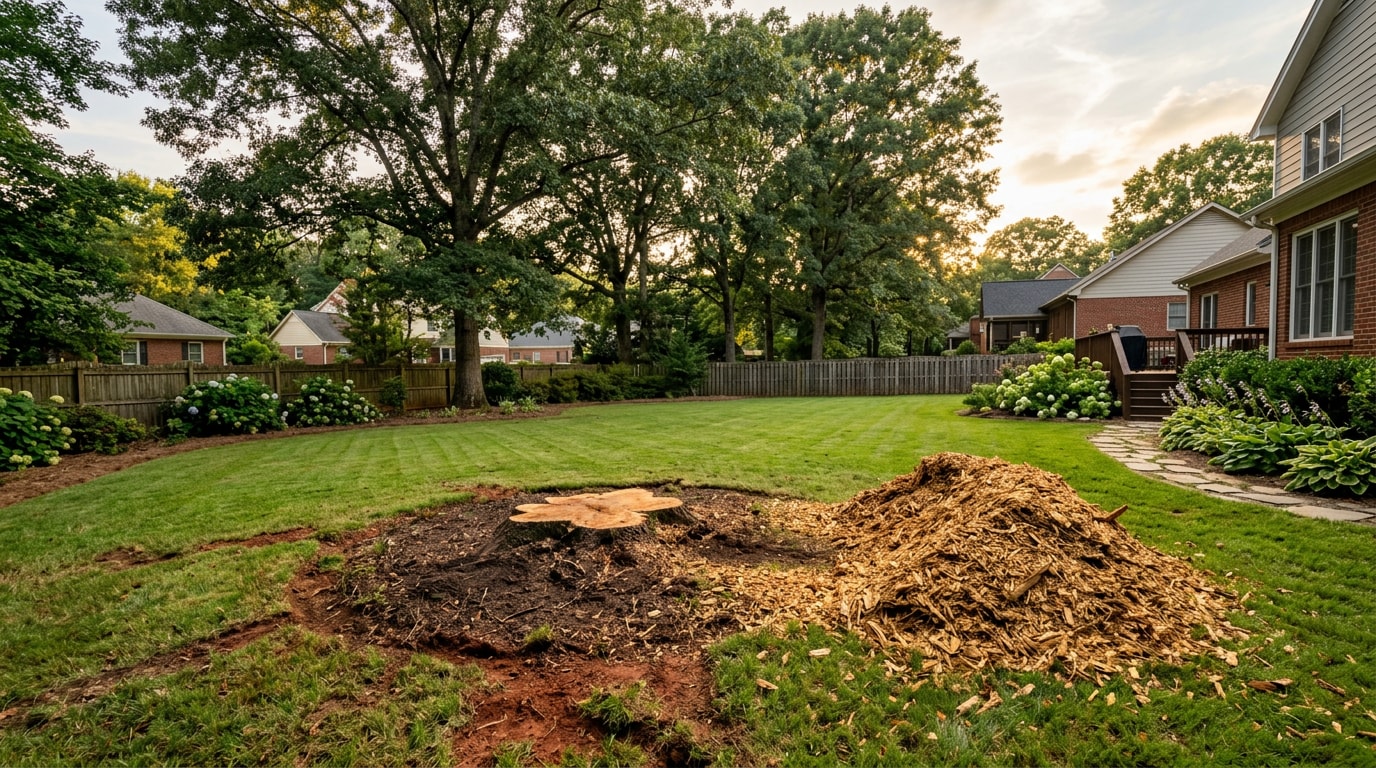
Mulch left on the ground stops erosion and keeps soil-borne diseases from splashing up onto nearby plants , which is a real factor on the sloped, fencerow-adjacent ground common around Walhalla. For a straightforward fence line or pasture reclaim, forestry mulching is usually the faster, less invasive call. For a lot that needs to be fully bare before construction, full land clearing or right-of-way clearing along a fence or property line is the better fit.
What Cedar Clearing Costs in Walhalla (2026)
Pricing depends heavily on stem size, density, and how much of the stand is cedar versus mixed hardwood brush. As a general guide for the Upstate in 2026:
| Density | What it looks like | Typical cost per acre |
|---|---|---|
| Light | Scattered saplings, open fence line | $600 – $1,200 |
| Moderate | Solid cedar thicket, closed canopy understory | $1,200 – $2,200 |
| Heavy | Dense, interlocked stand with larger-diameter trees | $2,200 – $3,500+ |
Most crews also carry a minimum job fee to cover mobilization, since getting a mulching head or dozer to your property costs roughly the same whether you're clearing a quarter acre or ten. If the goal is a fully bare, build-ready lot rather than a mulched-and-open fence line, lot clearing and debris removal get added to the scope, which shifts the number upward.
The only way to get a real figure for your property is a site walk — density, access, and slope move the price more than acreage alone. Get a free estimate and we'll give you an actual number, not a guess.
Permits and Stormwater Rules Before You Clear
Permit requirements in South Carolina hinge mostly on how much ground gets disturbed, not on the fact that it's cedar specifically.
- Projects disturbing less than 1 acre:
a Notification Form for Sites Disturbing Less Than 1 Acre has to be submitted for review before SCDES issues an exemption letter.
- Projects between 1 and 2 acres:
anyone clearing, grading, or excavating in that range has to obtain coverage under the state's Construction General Permit before work starts, including smaller sites that are part of a larger development plan.
- Projects over 2 acres typically require a full Stormwater Pollution Prevention Plan.
Brush-only forestry mulching that leaves roots and topsoil intact usually falls outside these thresholds since it isn't technically "land disturbance" in the regulatory sense — but once grading, dozing, or site prep is part of the job, the acreage math applies. Check with the South Carolina Department of Environmental Services or Oconee County before equipment shows up, especially on anything over an acre.
Full-Service Land Clearing and Site Prep in Walhalla, SC
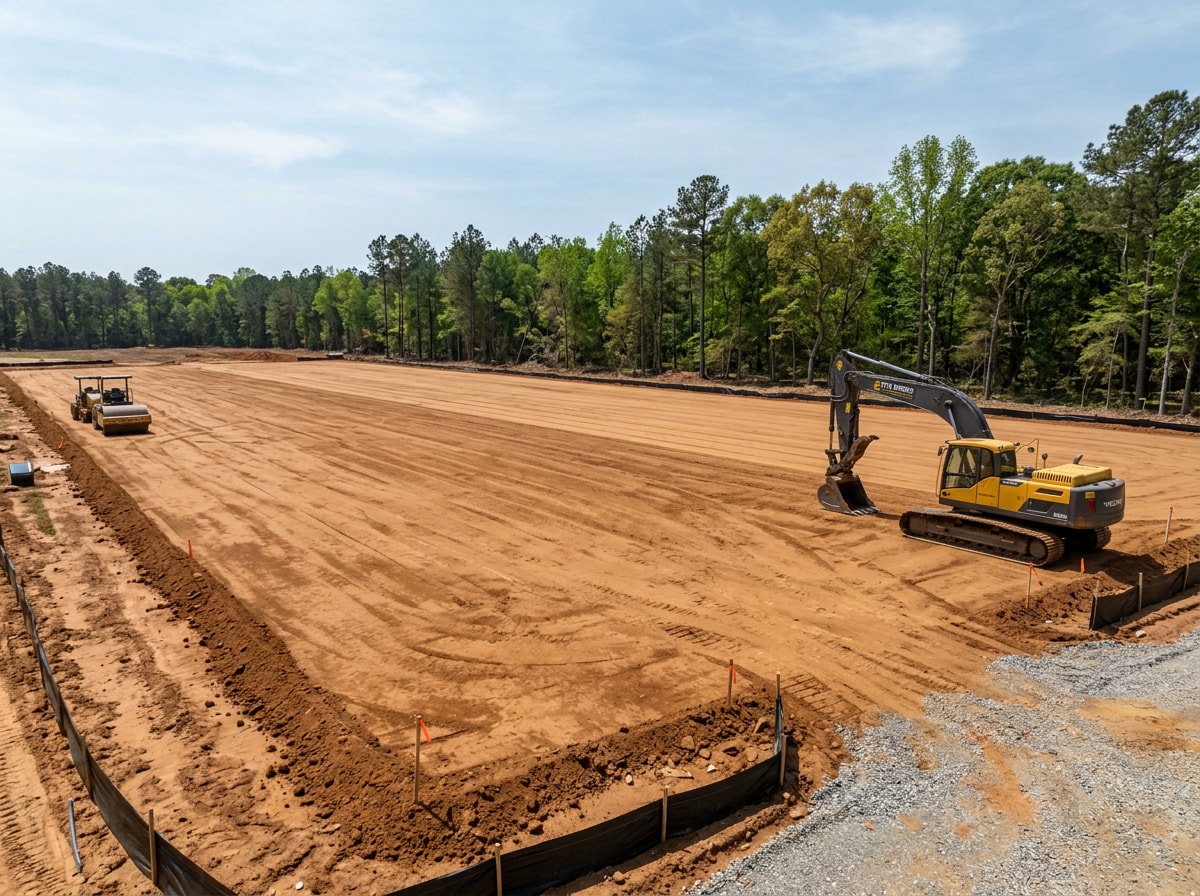
Cedar removal is rarely the whole job. Once the cedar's down, most Walhalla properties still need grading to shape drainage, site preparation for the odd large specimen too close to a structure to mulch safely.
Argus Forestry runs this full sequence as one job rather than handing it off between three different contractors — cedar clearing, debris handling, and grading under one crew, one schedule. If you're in Six Mile, Clemson, Seneca, Westminster, Pendleton, or Sunset, we cover the same ground across Oconee County.
FAQ
What does cedar clearing in Walhalla, SC actually include?
It's the removal of eastern red cedar and any mixed brush around it — by hand tools, mower, forestry mulching head, or dozer, depending on density — followed by debris handling (mulched in place, hauled, or burned under permit).
Does cutting down a cedar tree kill it for good?
Yes, as long as the cut is made below the lowest living green branch. Cedar is a juniper and doesn't resprout from a cut stump the way oaks, maples, or sweetgum do.
Is land clearing the same as excavation?
No. Land clearing removes trees, stumps, brush, and debris. Excavation digs and moves soil for foundations, drainage, or grading — it's a separate step that usually follows clearing.
Do I need a permit to clear land in Walhalla, SC?
Often, yes, once you cross certain disturbance thresholds. Under an acre needs a simple notification form; 1 to 2 acres needs Construction General Permit coverage; over 2 acres usually needs a full SWPPP. Brush-only mulching that leaves roots and topsoil in place is generally exempt.
What's the cheapest way to clear cedar from a property?
Hand tools cost the least upfront but only make sense for a handful of small trees. Past that, forestry mulching is usually the lowest total cost once you account for the hauling and burn-permit fees that traditional dozer clearing adds.
How long does a cedar clearing project take?
A half-acre fence line can be mulched in a few hours; a multi-acre thicket can take a full day or more. Density and access matter more than raw acreage, which is why a short site visit is the only reliable way to pin down a timeline.