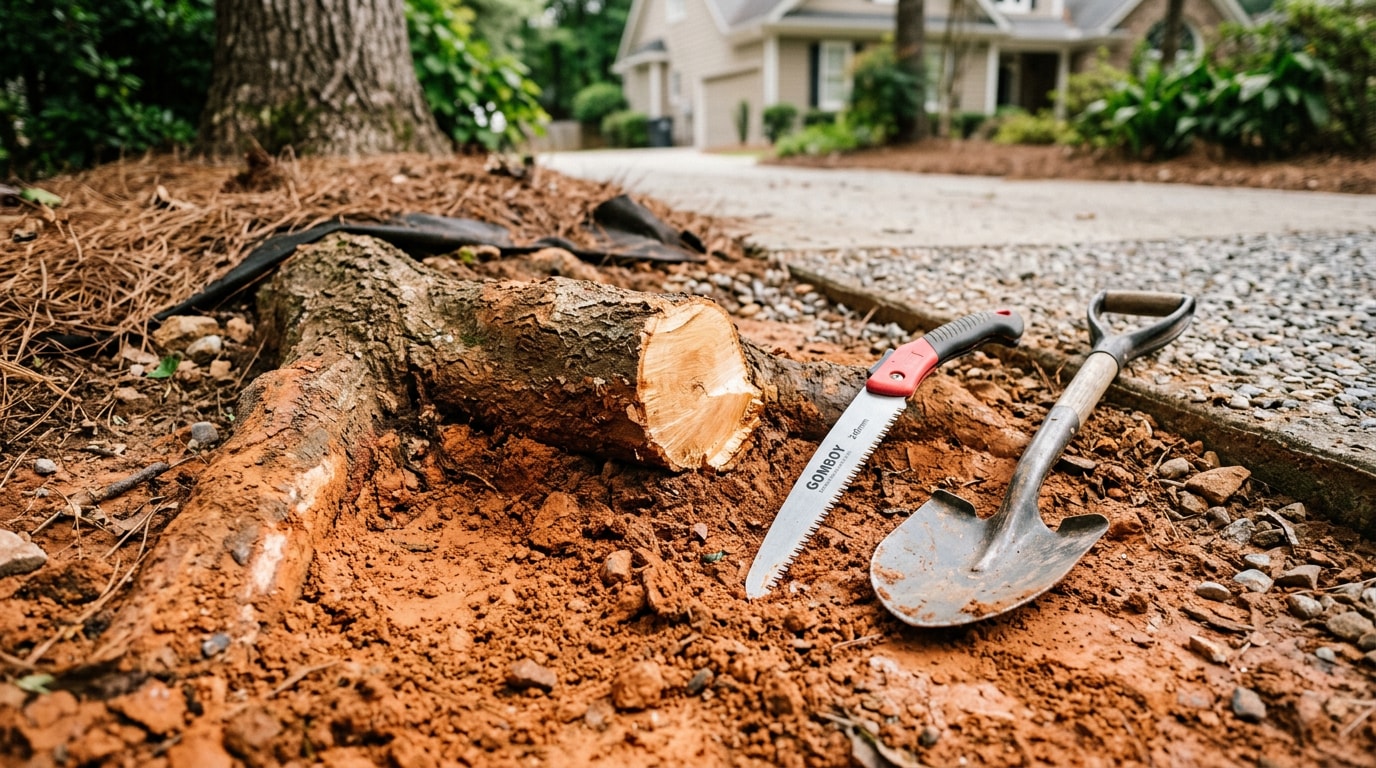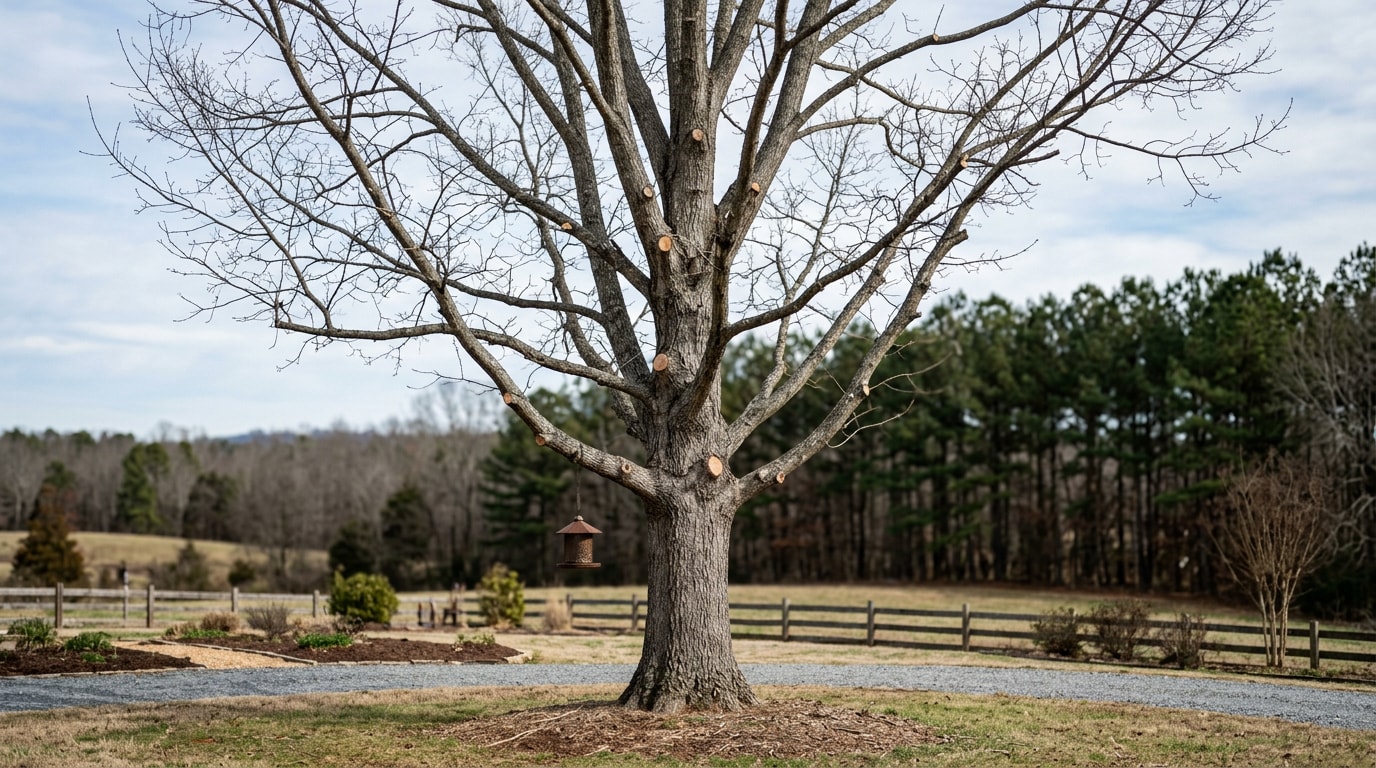
Can you kill an oak tree by trimming it in Oconee County, SC? Yes, if you cut at the wrong time of year, remove too much canopy at once, or make the wrong type of cut. None of those mistakes are rare, which is why so many healthy-looking oaks end up declining a year or two after a weekend DIY trim.
Can You Kill an Oak Tree by Trimming It?
Yes. Improper pruning can genuinely kill an oak, but the cutting itself isn't the real danger. Timing, dose, and cut quality are what separate a tree that heals cleanly from one that starts dying from the inside out.
Age matters more than most homeowners expect. Young oaks, generally under three years old, should only lose dead or damaged branches. Their root systems and energy reserves aren't built up enough to recover from heavier cuts.
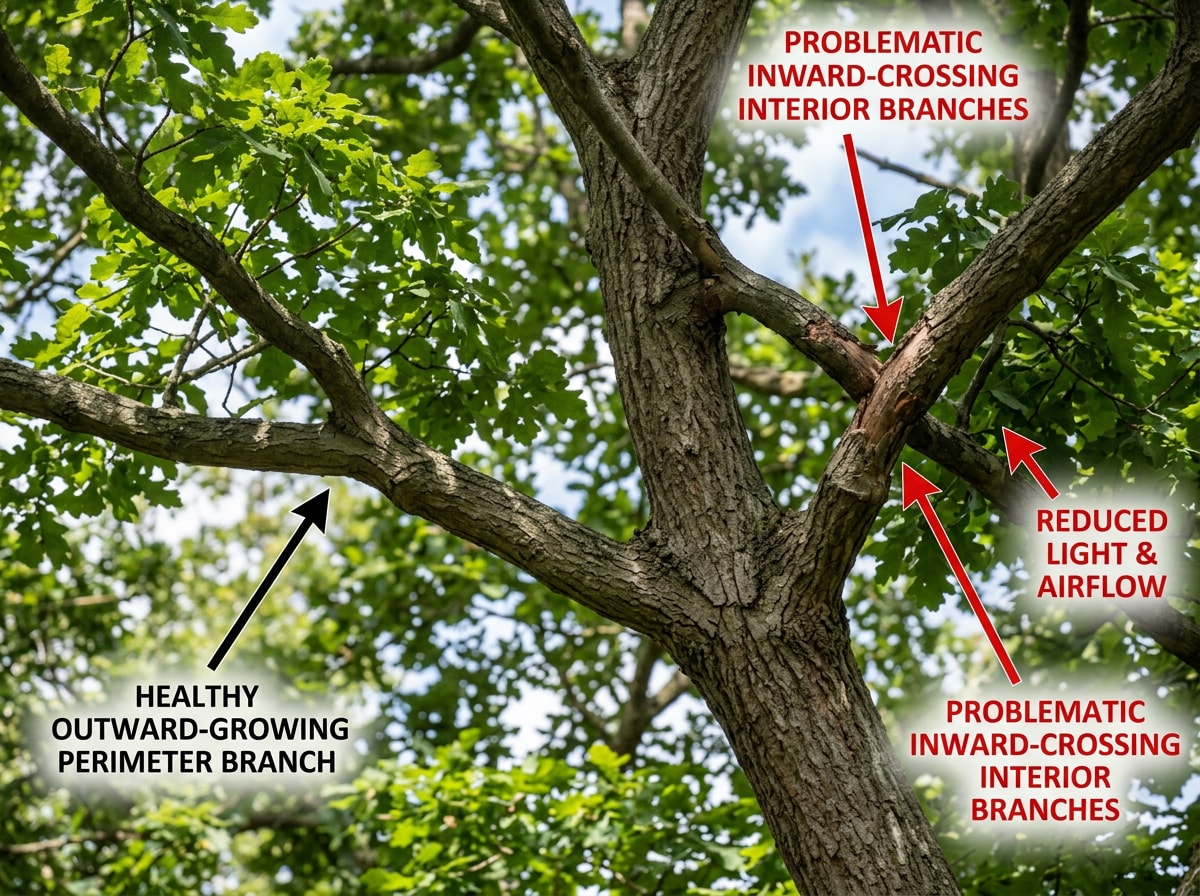
Mature, established oaks tolerate far more shaping. Even then, limbs that grow toward the center of the canopy or rub against neighboring branches should come out, since that friction creates open wounds that invite insects and fungus.
Arboriculture standards used across the industry, including the ANSI A300 pruning standard referenced by the International Society of Arboriculture, recommend not removing more than one-quarter of the foliage from a branch unless the entire branch is being removed . That single guideline prevents most of the shock-related dieback we see on over-pruned oaks.
After pruning hundreds of oaks across Oconee County's hills and ridgelines, our crews at Argus Forestry see the same two mistakes on repeat: trimming in April instead of January, and taking off too much canopy in one visit because "it was already up there." Both are fixable with a little planning.
When to Trim Oak Trees in Oconee County
Timing decides whether a cut heals over cleanly or becomes an entry point for disease. The safest window is the dormant season, when slowed metabolism reduces stress and limits the fungal activity that thrives around fresh wounds.
Nationally recognized tree health guidance is blunt about the growing season: oaks should not be pruned between mid-April and mid-October because fresh wounds made during the growing season can attract the beetles that transport oak wilt spores .
| Season | Risk Level | Recommended Action |
|---|---|---|
| November – February | Low | Best window for structural pruning and shaping |
| March | Caution | Light trimming only; finish before bud break |
| Mid-April – Mid-October | High | Avoid pruning except for safety hazards |
Is Oak Wilt Actually a Risk in Oconee County?
Here's the detail most generic guides skip: oak wilt is real and documented in South Carolina, but it isn't evenly spread across the state. Clemson's Home & Garden Information Center lists exactly where it's been confirmed, and oak wilt occurs in nine counties in South Carolina: Aiken, Calhoun, Chesterfield, Kershaw, Lancaster, Lee, Lexington, Darlington and Barnwell . Oconee County is not on that list.
That doesn't mean Oconee homeowners can ignore the calendar. Aiken's experience shows how fast the disease moves once it arrives: oak wilt was discovered in 22 water oaks on Charleston Street and the trees had to be removed , and the response was serious enough that a local nonprofit donated $1.75 million to support proactive tree pruning, undergrounding of powerlines, and long-term preservation efforts . The disease can travel. Dormant-season pruning is cheap insurance against ever becoming the next county on that list.
Which Branches to Trim, by Age
- Under 3 years old: Remove only dead, broken, or clearly diseased wood. Leave everything else alone.
- 3 years and older: Remove inward-growing and crossing limbs first. These cause the most wound damage over time.
- Any age: Never cut a branch simply because it's in the way of a view or a mower. If it's healthy, leave it or consult an arborist about a reduction cut instead of a full removal.
Our Tree Trimming crews schedule most Oconee County oak work between November and February for exactly this reason.
Best Pruning Practices That Prevent Tree Damage
Knowing when to cut only matters if the cut itself is done correctly. These four mistakes cause more long-term oak damage than bad timing ever does.
| Cutting Error | What It Looks Like | Why It Hurts the Tree |
|---|---|---|
| Heading cut | Branch cut back to an arbitrary point, not a lateral bud | Triggers weak, overcrowded regrowth |
| Lion tailing | Interior branches stripped, foliage left only at branch tips | Reduces photosynthesis, invites sunscald and wind damage |
| Flush cut | Cut made flush against the trunk | Destroys the branch collar, the tissue that seals the wound |
| Stub cut | Limb left too long past the collar | Stub can't seal over, decay moves inward |
The two most common pruning errors are known as "flush cuts" and "stub cuts," and both happen during the final cut. Every branch has a swell where it meets the trunk, the branch collar, and all pruning cuts should be made further away from the trunk than this collar .
Use the Three-Cut Method
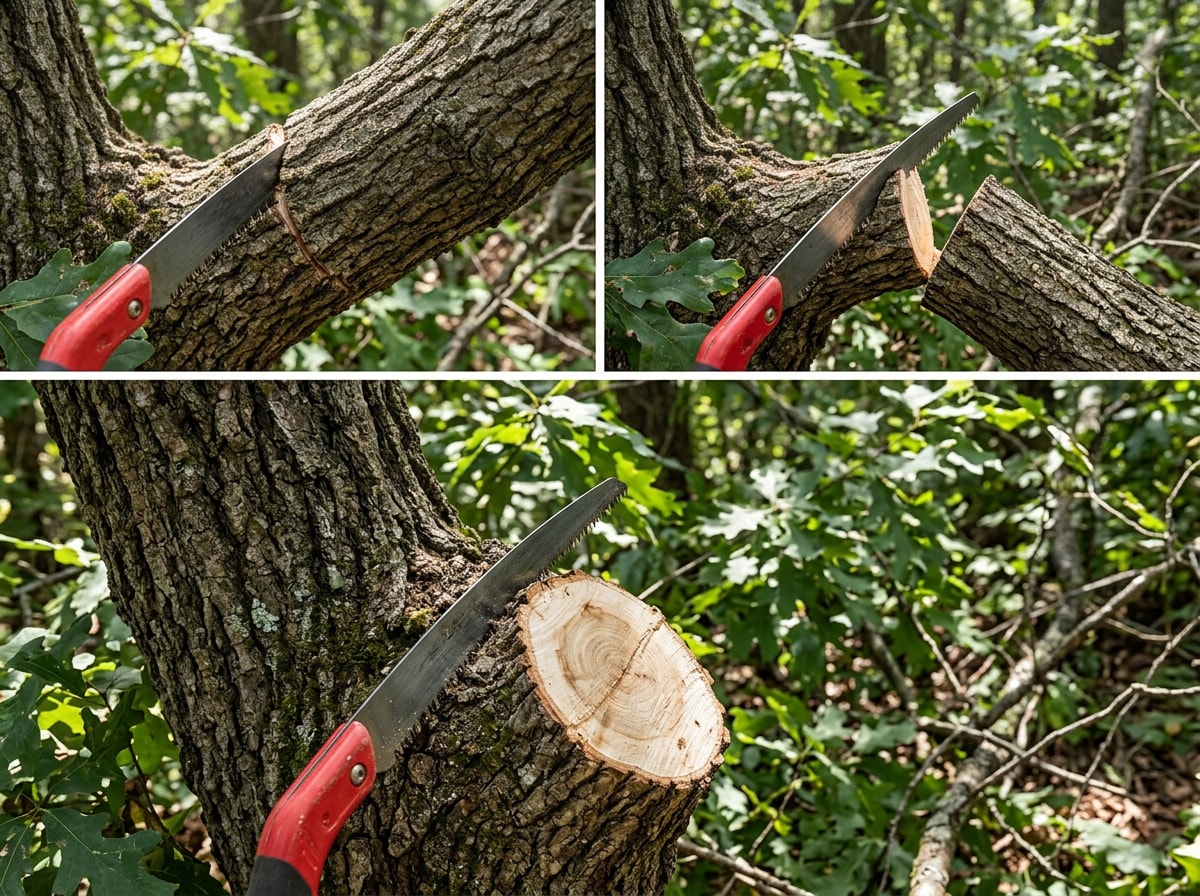
For any limb too heavy to control by hand, arborists use a standard three-step sequence instead of a single cut:
Make a shallow cut on the underside of the branch, away from the collar, to prevent bark tears if the branch drops suddenly.
Just beyond the partial cut, cut through the branch to remove the bulk of the weight.
Finish the prune by cutting through the branch just outside the branch collar.
This isn't a company preference. The same sequence appears in state tree-care guidance built around the ANSI A300 (Part 1) Tree, Shrub, and other Woody Plant Maintenance standard developed by the Tree Care Industry Association , the benchmark most arborists and insurers use to judge whether pruning work was done correctly.
Managing Pests and Disease in Oak Trees
Over-trimming or trimming at the wrong time opens the door to more than oak wilt. Crossing cuts, flush cuts, and stripped canopies all create entry points for canker fungi, borers, and scale insects that a healthy, correctly pruned oak would otherwise shrug off.
Keep these habits in place year-round:
- Sanitize pruning tools between cuts, especially between different trees, to avoid moving pathogens from infected wood to healthy wood.
- Stay inside the quarter-foliage guideline per season rather than stacking several light trims into one heavy one.
- Treat any pruning done outside the dormant window as an emergency exception, not a routine schedule.
- Watch for rapid leaf discoloration, wilting, or early leaf drop, especially on oaks pruned during spring or summer.
If a tree is already showing dieback, pruning alone won't fix it. At that point a site visit matters more than another cut, and our Tree Removal team can tell you quickly whether a declining oak is salvageable or needs to come down before it becomes a hazard.
When Trimming Isn't Enough: Call a Professional
Some situations go past routine maintenance:
- Storm-damaged limbs hanging over a roof, driveway, or power line
- Large interior deadwood you can't safely reach from the ground
- A mature oak that hasn't been pruned in years and needs staged structural work over multiple seasons
- Any sign of rapid leaf browning, bark cracking, or fungal mats
For storm-related emergencies, our Storm Cleanup crews handle off-season cuts safely and can apply wound protection where needed. For routine seasonal shaping across Six Mile, Walhalla, Seneca, Westminster, Pendleton, and the rest of Oconee County, scheduling ahead of the dormant window gets the best results.
If you're weighing DIY against hiring it out, our guide on licensed local tree care in Seneca, SC walks through what a professional visit actually includes and what it typically costs.
Get a Free Estimate before you make the first cut. A quick walk-through from an ISA-trained crew costs nothing and can save a tree that's been in your yard for decades.
FAQ
How do you trim an oak tree without killing it?
Prune during the dormant winter season, stay under roughly one-quarter of the branch's foliage per cut, and follow the age rule: dead wood only on young trees, inward-growing and crossing limbs on mature ones. Always finish large cuts with the three-cut method to protect the branch collar.
How much of an oak tree can you trim without killing it?
As a general ceiling, avoid removing more than about one-quarter of a branch's foliage in a single season unless you're removing the whole branch. Going well beyond that increases stress and disease risk even on a healthy, mature oak.
Can over-trimming harm my tree?
Yes. Removing too much canopy at once reduces the tree's capacity for photosynthesis and leaves remaining limbs more exposed to wind damage, sunscald, and disease, including oak wilt.
What time of year should you avoid trimming oak trees?
Avoid pruning from mid-April through mid-October. That's the active season for the sap-feeding beetles that spread oak wilt spores through fresh wounds. Stick to November through February when possible.
Is oak wilt a concern for oak trees in Oconee County, SC?
Oconee County isn't currently on Clemson's list of South Carolina counties where oak wilt has been confirmed. Dormant-season pruning is still the safest habit, since the disease has spread quickly in other parts of the state once it took hold.
How often should I trim my oak tree?
Mature oaks generally need structural pruning only every two to three years. Young oaks need lighter, more frequent attention limited to dead or damaged wood. If you're unsure what your tree needs, request a free estimate before cutting anything yourself.