Brush clearing services in Walhalla, SC turn tangled, unwalkable acreage into land you can build on, fence, or mow again. Blue Ridge foothill terrain, thick privet, and seasonal kudzu make Oconee County one of the tougher places in the Upstate to clear by hand. This guide breaks down the methods, the permit rules that actually apply, and the cost factors worth knowing before a crew shows up.
Brush Clearing vs. Land Clearing in Walhalla, SC
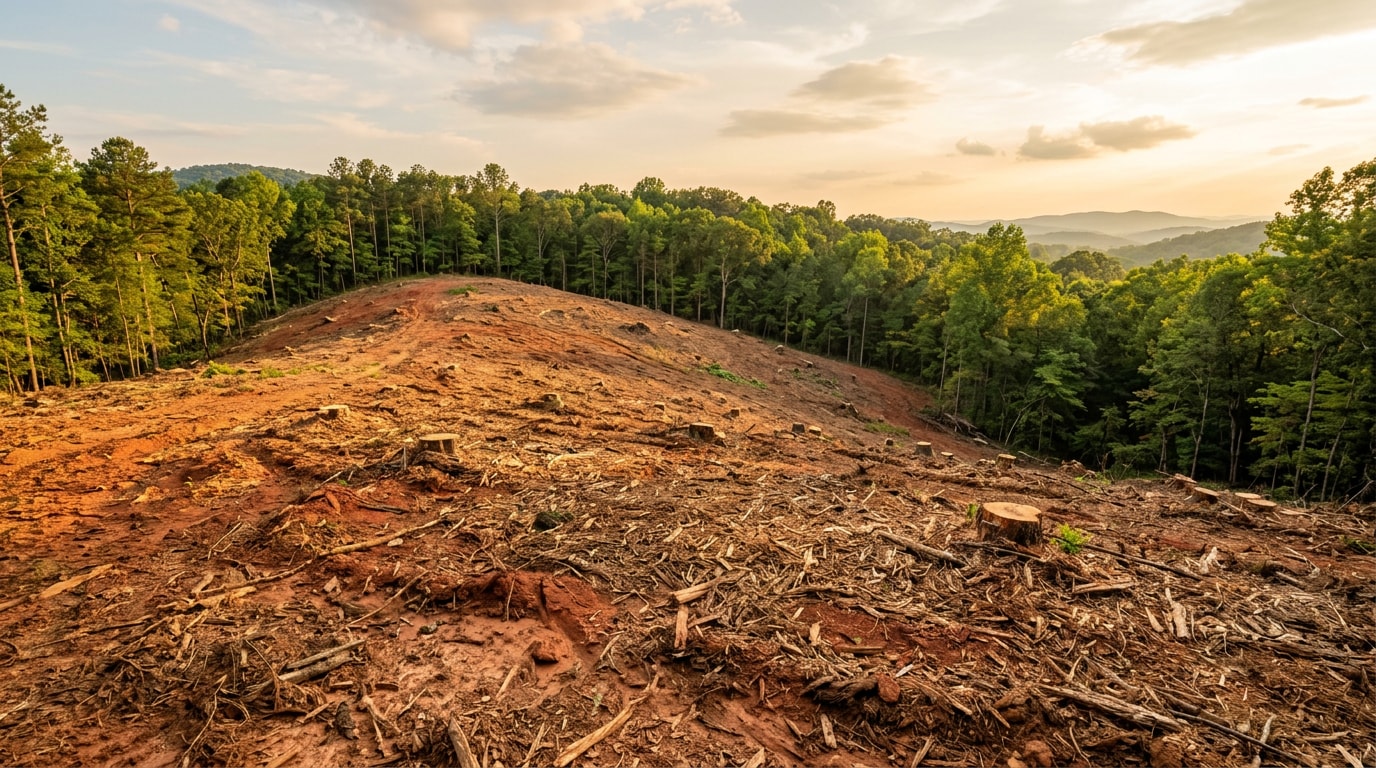
Brush clearing and full land clearing get used interchangeably, but they're not the same scope of work. Brush clearing removes undergrowth, vines, saplings, and thick weeds without necessarily touching mature trees or grading the ground underneath. Full land clearing goes further, often pulling stumps and prepping the site for a foundation, driveway, or septic field.
The core brush clearing job uses modern equipment to open up an overgrown lot for landscaping, fencing, or new construction. In Walhalla's foothill terrain, that distinction matters more than it would on flat ground. Wooded parcels here often sit on uneven slopes with limited equipment access, so the clearing plan has to work around the land instead of forcing a single method on every acre.
If your project needs more than brush removed, such as stump pulling or a graded building pad, our land clearing and lot clearing services cover that next step.
Methods Compared: Which Brush Clearing Option Fits Your Lot
Four methods cover nearly every brush clearing job in Oconee County. The right one depends on how dense the growth is, how steep the ground is, and what you plan to do with the land afterward.
| Method | Speed | Soil Disturbance | Best Use |
|---|---|---|---|
| Forestry mulching | Fast | Low | Wooded lots, one-time reclamation |
| Bush-hogging | Very fast | Low | Field and pasture maintenance |
| Hand-clearing | Slow | Minimal | Small, tight, or sensitive areas |
| Excavator clearing | Moderate | High | Full land clearing, grading prep |
Forestry Mulching in Walhalla, SC
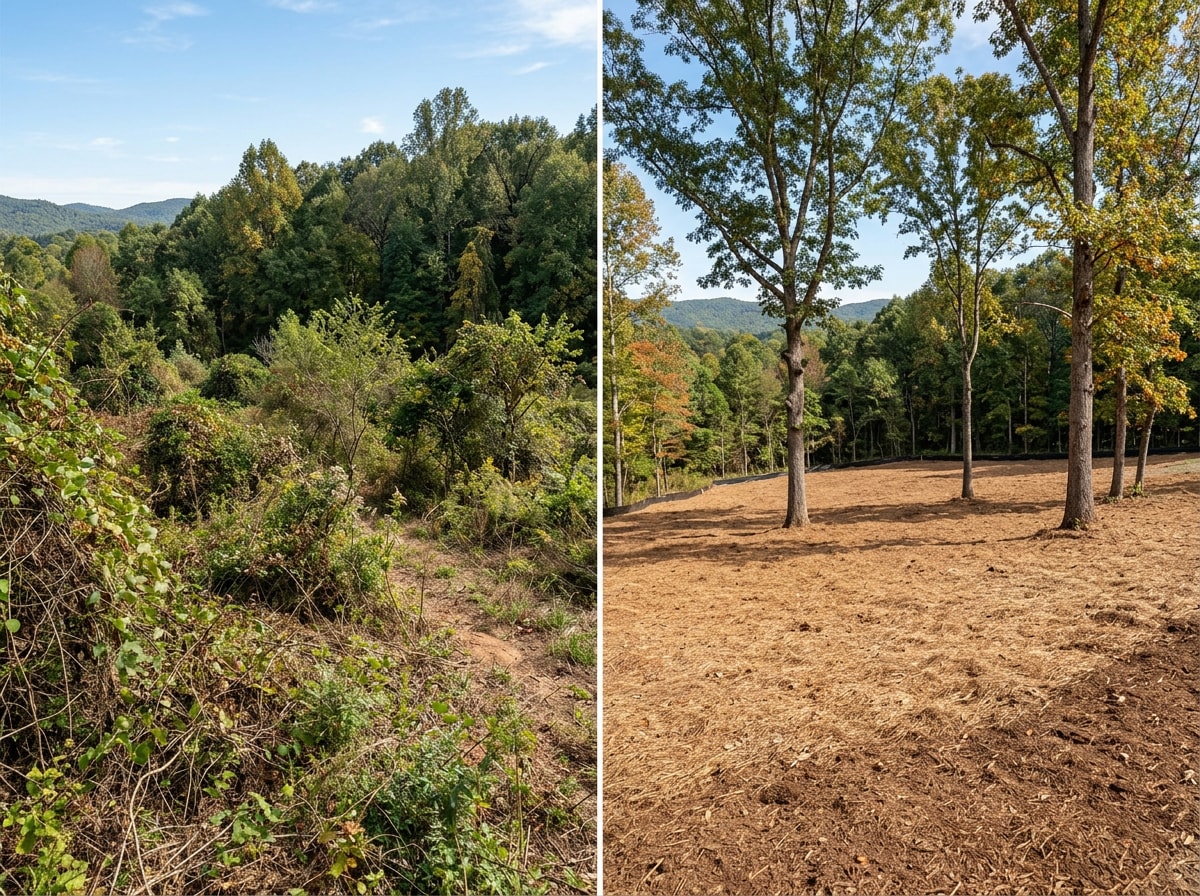
Forestry mulching has become the preferred method for clearing overgrown land without stripping the soil underneath. A single machine grinds brush, saplings, and even small stumps in place, leaving a layer of mulch behind instead of a debris pile.
That matters on sloped lots. Mulches prevent soil splashing, which not only stops erosion, but keeps soil-borne diseases from splashing up onto the plants, and organic mulches can improve the soil structure as they decay and move down into the soil. On Walhalla's hillsides, that root-holding mulch layer does real work slowing runoff until grass or ground cover reestablishes.
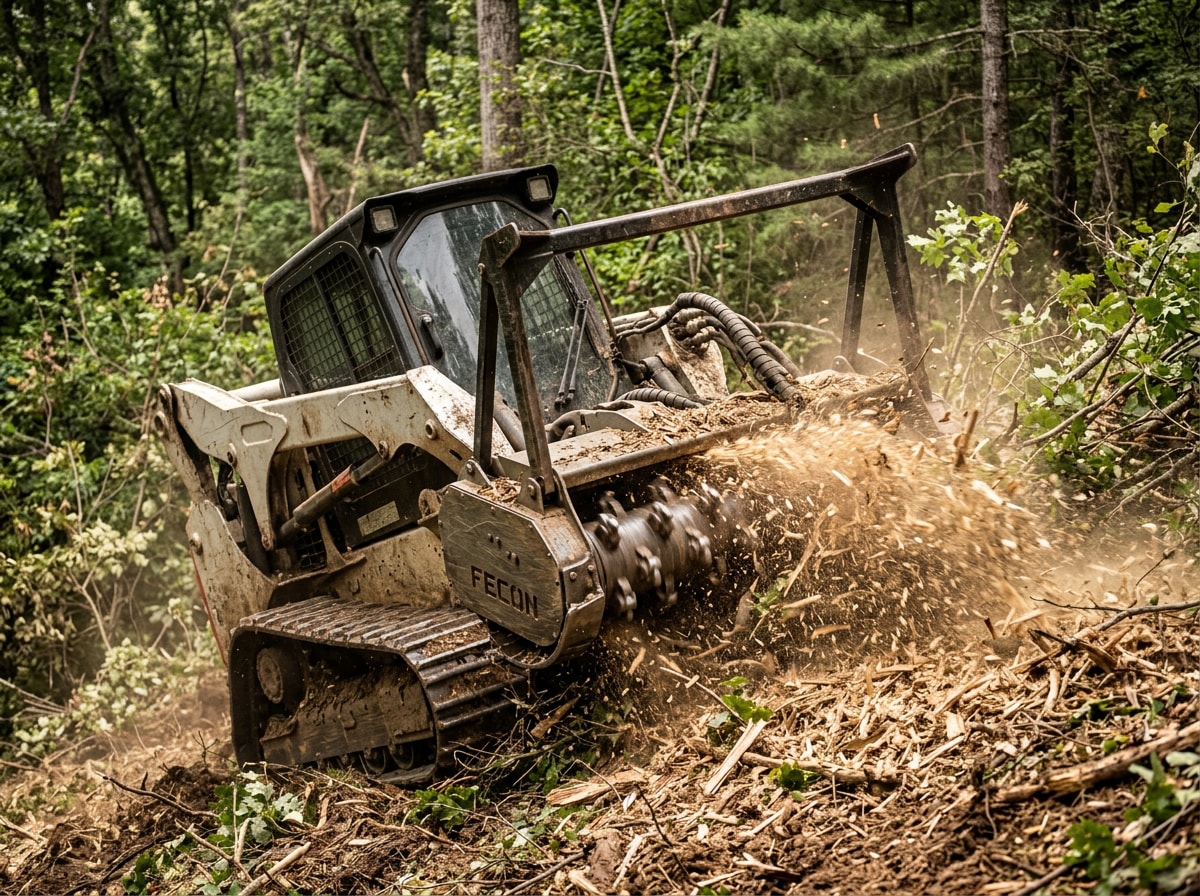
See the full process on our forestry mulching service page, or browse our broader landscaping services for related work like grading and site prep.
Bush-Hogging for Ongoing Brush Control
Bush-hogging uses a tractor-pulled rotary cutter to knock down tall grass, brush, and small saplings quickly. It's a rough-cut mowing solution built for dense vegetation and uneven terrain, not a one-time reclamation tool.
The difference comes down to purpose:
- Bush-hogging works best for ongoing pasture and field maintenance, where regular passes keep land usable year to year.
- Forestry mulching suits a wooded lot that hasn't been touched in years and needs a full reset in a single visit.
Property lines and fence rows get overgrown the same way. Our right-of-way clearing service keeps those boundaries open without clearing more than necessary.
What Actually Drives Brush Clearing Cost in Walhalla
Pull up five different online cost calculators for "brush clearing per acre" and you'll see numbers ranging from under a hundred dollars to several thousand, often for the same two words. That's not a typo problem, it's a scope problem: some of those figures describe mowing a pasture, others describe grinding a dense thicket of hardwood saplings with an excavator-mounted mulcher. A generic per-acre number from a national site can't account for what's actually standing on your lot.
The real cost drivers on a Walhalla property are:
- Acreage and density – a quarter-acre of briars costs far less than an acre of interlocked privet and saplings
- Site access – steep driveways and creek-adjacent parcels slow equipment and raise mobilization time
- Disposal method – mulching in place costs less than hauling and dumping debris
- Slope and ground condition – rocky subsoil common in the foothills can slow production on otherwise straightforward jobs
Because those variables swing so widely, the only reliable number is one built from an actual site walk. A free estimate is the fastest way to get a price that reflects your lot instead of a national average.
Who Benefits from Professional Brush Clearing
Homeowners, pasture owners, and buyers of raw wooded lots all gain from clearing overgrown property. Many parcels in the area are difficult, or even unsafe, to walk until the brush is cut back and usable yard space is reclaimed.
Thick undergrowth also shelters snakes, rodents, and insects. Clearing it doesn't eliminate wildlife, but it pushes animals toward denser, less-trafficked ground away from the house.
Fire hazard reduction is a real, documented benefit too. Firewise yards are protected through zones with grass, rock, or evergreen ground cover closure to the home, creating an area where high-intensity fires have little to burn.
This space is needed to slow or stop the spread of wildfire and it helps protect your home from catching fire, either from direct flame contact or radiant heat. That's why defensible-space clearing around structures is a standard recommendation from the USDA Forest Service, not just a landscaping preference.
Walhalla's Terrain Challenges: Slope, Rock, and Water
Land clearing in Walhalla is rarely a one-size-fits-all job. Each parcel brings its own mix of dense underbrush, slope, and ground condition. Blue Ridge foothill terrain often means steep-slope clearing with limited equipment access, while rocky subsoil can slow progress that would move fast on flatter ground elsewhere in Oconee County.
Parcels near creeks or seasonal drainage add another layer of caution, since disturbing a stream buffer can trigger regulatory review before work ever starts. A local crew adjusts equipment and sequencing for each condition, and a site walk before mobilization catches wetland or slope issues early rather than mid-job. If your project needs grading or a building pad once the brush is gone, site preparation picks up where clearing leaves off.
Do You Need a Permit to Clear Brush in Walhalla, SC?
For routine brush clearing and forestry mulching that doesn't involve grubbing stumps or grading, most residential projects in South Carolina don't trigger a state permit. The trigger is soil disturbance tied to acreage, not brush removal on its own.
South Carolina's NPDES Stormwater Program requires that anyone engaged in clearing, grading, and/or excavating activities that disturb between 1.0 acres and 2.0 acres, including smaller sites in a Larger Common Plan of development or sale, obtain coverage under the state's Construction General Permit.
For construction activities that disturb less than 1 acre, South Carolina still requires that a Notification Form for Sites Disturbing Less Than 1 Acre be submitted for review. Full details on which threshold applies are on the SC Department of Environmental Services stormwater page.
Locally, Oconee County's Planning & Zoning office handles permit review for land-disturbing activity, and online permitting through the county's system covers categories including land use permits, plat approvals, and zoning permits. Properties inside Walhalla's city limits may fall under separate city review rather than county code enforcement, so confirm with Oconee County Planning & Zoning or Walhalla's city offices before clearing near a creek, wetland, or protected buffer.
For more on how clearing rules play out on wooded Walhalla parcels specifically, our cedar clearing in Walhalla, SC guide walks through a real cedar stand project from permit check to finished cleanup. Oconee County property owners dealing with other vegetation questions can also see our area overview and Walhalla service area page.
Ready to get your lot assessed? Request a free estimate and we'll walk the property before quoting a method or price. You can also start from our homepage to see the full range of tree, land, and excavation services we run across the Upstate.
FAQ
Do you need a permit to clear land in Walhalla, SC?
Usually not for routine brush clearing alone. A permit becomes likely once the project disturbs an acre or more of soil, involves grading or stump grubbing, or touches a wetland or stream buffer. Confirm with Oconee County Planning & Zoning or Walhalla's city office before starting, since rules differ based on whether the parcel sits inside city limits.
What's the difference between brush clearing and land clearing?
Brush clearing removes undergrowth, vines, and small saplings while leaving mature trees and the ground surface intact. Land clearing goes further, including stump removal and grading, to prepare a site for construction.
How do you clear brush?
Small areas can be cleared manually with loppers and brush cutters. Larger properties typically call for a bush hog or forestry mulcher attached to heavy equipment, which clears the same ground far faster than hand tools.
What happens to the removed brush?
Removed brush is disposed of responsibly, often through chipping, mulching in place, or hauling off site, depending on project size and the disposal option you choose. Our debris removal service handles the haul-off option when mulching isn't the right fit.
How much does brush clearing cost?
Cost depends on acreage, vegetation density, site access, and disposal method, and it varies enough between properties that generic online averages aren't reliable. A free estimate based on an actual site walk is the only way to get an accurate number for your land.
How long does brush clearing take?
A straightforward quarter- to half-acre lot can often be cleared in a single day. Larger or denser parcels, especially those with steep access or heavy stem counts, may take several days. Your estimate will include a realistic timeline based on the site walk.